Archive | August, 2013

Naughty & Nice Hot Pepper Jelly

9 Aug

My burning love for hot peppers, all pun intended, didn’t fully develop until I hit Californian soil and damn near scorched the skin off my upper lip with a habanero chile salsa, because “how hot can it be?!” , she said with an air of disbelief.

Right. Carry on…

Unlike many Southwest natives, I didn’t grow up with chiles. As a matter of national embarrassment, I don’t even recall ever having seen hot peppers in my Flemish grocery store? Then again, cooking with hot peppers was such an oddity in Belgium in the early 1990’s, that I may have unduly ignored peppers altogether. It’s a dark void in my memory, like that time where I lip-synced Duran Duran’s ‘Hungry like the wolf’ in my bathroom and got caught. Don’t ask. It’s too painful.

After all these years, I’m slowly but surely learning to navigate my way around the many varieties of spicy hot peppers. Occasionally, however, my inner-Sacagawea brazenly surfaces during farmer’s market strolls and I inadvertently end up destroying a Flemish taste bud or two, encouraged by this kind of peppery food porn:

20130809-193758.jpg

The idea of a hot pepper jam didn’t even occur to me until my colleague Alex channeled her inner-foodie and excitedly told me about ‘the best’ jam she’s ever eaten! She confessed she could smear it on just about everything… well, maybe not everything. Either way, we made a pact that I would try my hand at recreating her fantastic pepper jelly, if she became a follower on my blog. I’m totally cheap that way.

I know how to make jam as Belgians are big on canning and preserving sunshine, what with our 9 months of rain and all, so I accepted the challenge. This jelly turned out beautifully and so flavorful! And yes, I too will boldly smear this on anything that will hold its deliciousness…

20130809-232503.jpg

NAUGHTY & NICE HOT PEPPER JELLY
(Adapted from a recipe by ‘River Cottage Preserves’)
– 1.5 lbs of sweet peppers (red, yellow or orange), approx. 3-4 large
– 3 small scotch bonnet peppers or habanero peppers (*)
– 3 red jalapeno peppers (*)
– 1 medium size red onion
– 1 1/4 cup of apple cider vinegar
– 2.5 cups of white sugar
– 1/2 cup of dry white wine
– a pinch of red pepper flakes
– a small pinch of saffron
– 1.5 oz of fresh grated ginger
– zest of 2 lemons
– 1.5 oz powdered pectin
(*) you can use any combination of peppers you like. For a few pointers, check out my friend Debi’s blog over at Life Currents)

Chop sweet peppers in half, removing bitter white ribs and seeds. Slice into thin ribbons, then into small dice. Chop onion into very small dice as well. Peel and grate (or finely chop) the ginger.

Scratch whatever itch you may have on your face now, because you’re done touching your face for the next few minutes!

Chop hot peppers in half, remove white-ish ribs and seeds, and chop into very fine dice. Try not to breathe through your nose or touch any sensitive areas, as the capsicum in these babies will avenge you get to you.

In a heavy, non-reactive pan, place sweet & hot peppers, grated ginger and onions and pour apple cider vinegar & white wine over them. Sprinkle pepper flakes on top and slowly bring to a simmer.

When simmering, add saffron, lemon zest and sugar, and stir until sugar is dissolved. Bring to a rolling boil, then add pectin. Boil hard for 6 minutes to activate the pectin. Remove pan from heat and set aside for 20 minutes.

Ladle jam into small glass jars, and let cool… Or alternatively, for a longer shelf-life, process in a water bath or canning machine.

This jam will remain fresh in your fridge for approx. 1 month.

Spicy Caribbean Fish Stew

9 Aug

OK. So a Belgian-Caribbean connection may sound far-fetched, but if you think about it, it isn’t really all that bizarre. After all, being right next door Holland, we’re directly exposed to the culture of its territories overseas and the culinary melting pot that is Suriname and the Dutch Antilles.

Furthermore, I’ve been blessed to work in the travel industry for roughly 20 years now and have always been exposed to a broader world view in that capacity. My very first job was at the much coveted chain of adventure travel stores named ‘Joker Toerisme’, a company exuding a laid back REI-kinda atmosphere. To this day, ‘Joker Toerisme‘ holds fast to its deep-rooted values of promoting sustainable travel with the utmost respect for local culture & customs, and ensures that the many tourist dollars spent overseas directly benefit the local population. I remember that the people who walked into our store were firm believers in fair trade and genuinely seemed interested in the cultural heritage of their planned destination.

Despite my desire to relocate to the USA, I absolutely loved my job there. My colleagues were among the coolest, most caring & well-traveled people I’ve had the pleasure to meet in my life. Even though I amicably quit that job heavy-hearted when an opportunity to relocate arose 13 years ago, I can pick up the phone today and talk to any of them as though no time has passed… My visits back to Belgium always include a few dinner invitations from former colleagues, which are traditionally evenings that are filled with great travel stories, reminiscing about the old times with laughter and fantastic home-cooked meals from recipes that were collected from all corners of the world.

No matter how many hours pass, these cozy evenings seem to fly by quickly. Belgians are known to be a gregarious, hospitable folk. We take great joy in welcoming guests and providing a warm, cozy atmosphere. Like many Europeans, most of my Belgian friends have traveled extensively and their homes are eclectic havens of exotic textiles & interesting knick-knack’s that were collected throughout their many adventures overseas. I remember that many years ago, my friend Griet put on a slide show about her trip to the Caribbean she had literally just returned from. To set the proper tone, her massive oak wood table was adorned with Caribbean-style stoneware, set neatly on banana-leaf placemats, and she had cooked a scrumptious spicy fish stew from the island of Aruba. The aroma greeting me at the front door was as though I had set foot ashore the Dutch Antilles… Reportedly, she had collected the recipe from the innkeeper’s cook of a small bed & breakfast in Oranjestad. Rumor has it, the cook in question fancied Griet’s fair skin & blue eyes, but let’s not go there, shall we?

20130809-175857.jpg

SPICY CARIBBEAN FISH STEW
(Adapted from a recipe by the ‘Arubiana Inn’ in Oranjestad, Aruba)
– 1 lbs of firm white fish (cat fish or halibut work great in this recipe)
– 1 lbs of large shrimp, shell-on
– 1 red onion, finely chopped or diced
– 2 cloves of garlic, minced or grated
– 2 whole cloves
– 2 laurel leaves
– 2 Tbsp of sweet curry powder
– 1 Tsp of ground cinnamon
– 1+ spicy red pepper(s), choose as per your ‘heat’ preference (*)
– 1 cans of diced tomatoes
– 1 lemon, zested & juiced
– 3 Tbsp of sour cream
– 1/3 cup of coconut cream (or coconut milk)
– Salt & pepper, to taste
– Olive oil
– Fresh cilantro, for garnish
(*) My friend Debi over at ‘Life Currents’ wrote a great post about choosing hot peppers. Read her post here, so you can decide how ‘hot’ you want to go in choosing the kind of pepper and the quantity for this dish.

In a large heavy pan, sauté the diced onion until translucent and starting to brown. After approx. 3 min or so, add the minced garlic, curry powder, cloves, cinnamon and chopped spicy pepper(s). Continue to stir-fry the spices and onions for 3-5 min to bring out their flavors. Add tomatoes, lemon juice, sour cream & coconut milk and season with salt & pepper to taste.

Chop fresh fish into large chunks, and place chunks in these in the sauce. Make sure to submerge them in the sauce as much as possible, so they cook evenly. Let them braise for about 15 min, then add shrimp and cook for 3-5 min more until shrimp are pink and fish is cooked through.

Sprinkle some chopped fresh cilantro over the top and serve with fried plantains, bread or rice.

Lemon Braised Chicken with Black Olives & Saffron

8 Aug

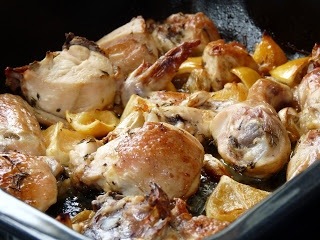
I have fond memories of our vacations in the South of France. How can you not completely lose yourself amidst the sights & smells of beautiful Provençe? The fragrant purple-glowing lavender fields, knotty olive trees, the distant sound of church bells echoing over the citrus groves, the sweet honey-like smell of juicy figs, freshly baked crusty French bread wafting through the warm air, old cobble stone streets that are host to bustling markets selling anything from creamy local goat cheese to bright colorful Provençal textiles, and the prerequisite dusty bocce ball courts that are strategically placed underneath the shady oaks in the old town square, where the older beret-wearing men mingle and discuss politics over a friendly game of ‘pétanque’ or ‘jeux de boules’, while their wives haggle with the chatty vendors over fresh fish and cured olives…

Provençe is where the good life is at… It seems time has come to a standstill in the sleepy cobblestone towns, with their red clay rooftops spread out against a backdrop of olive groves and lavender fields, and their historic architecture splayed over the hillsides. These are the kind of rural hamlets where senior villagers frequently lounge in comfortable chairs right outside the doorstep of their old stone houses, to catch up on local gossip and to gawk amusedly at the occasional accidental tourist that stumbles into town. I suppose the younger generation flees towards the excitement & lure of the larger cities as soon as they have the chance, and who can blame them? With nothing more than an old mossy church, a few cafés or bistros and a handful of ‘odds & ends’ type stores the size of shoebox, there’s hardly anything present to engage or capture the essence of youth in these old havens of peaceful nothingness.

It’s precisely here, in this type of quiet solitude, that you find that unforgettable meal in your trip that will fondly linger in your memory for years to come. A dish that is sourced from the best quality local ingredients only, purveyed fresh from the field that same hazy morning, and infused with generations of love & passion for authentic regional cuisine. The recipe below hails from such a charming town in Provençe, and as such, its flavor and smell will transport you directly to ‘Banon’, to name just one Provençal pearl…

20130809-064221.jpg

CHICKEN WITH LEMON, BLACK OLIVES & SAFFRON
– 4 whole chicken legs or 6-8 thighs, skin on
– 4 fresh lemons
– 3 large onions, roughly the size of a small orange
– Approx. 20 oil-cured black olives (the Greek kind, with a deep dark black color and slightly wrinkled skin)
– a hefty pinch of saffron
– 1 cup of chicken stock
– 2 cloves of garlic, minced or grated
– Salt & pepper, to taste

Chop onion in half, and then each half cross-wise in half again, slice each onion quarter in small rings. Juice 2 of the lemons and reserve both juice and peels. Quarter 3 lemons (including the juiced ones), and then slice each lemon wedge cross-wise in half again. Slice 1 lemon in pretty round slices, for visual appeal… Wash chicken legs and pat dry, then salt & pepper them liberally.

In a large Dutch oven, sauté the onions in a splash of olive oil until translucent and slightly browned. Add chicken legs skin side down and brown to a crisp. Add reserved lemon juice, all lemon wedges & slices, garlic, olives, chicken stock & saffron, and braise covered over low heat for approx. 60 min, until chicken is “fall-off-the-bone” tender and flavors have developed.
Serve with crusty French bread to sop up the delicious lemony sauce and a crisp, cold Pinot Gris.

Bon appétit!

Flemish Beignets

7 Aug

‘Oliebollen’ or ‘smoutebollen’, Belgium’s answer to American donuts, are firmly planted in youth sentiment for me. They bring back lots of teenage memories, of spending hour upon hour parading up & down the snowy fairgrounds with my friends, often in sub-zero temperatures, in hopes the cute fair hands would notice us and score us a free paper cone of hot beignets or a free ride.

When the weather gets dreary or downright mean, there’s nothing more comforting than to bite into a crispy hot ball of freshly fried dough, dusted with powdered sugar. The sugar instantly melts on the hot surface and forms a crackling coating on the outside of this deep fried dream. I’m telling you now, oliebollen are a ‘must have’ when the temps drop and your nose hairs are starting to congeal.

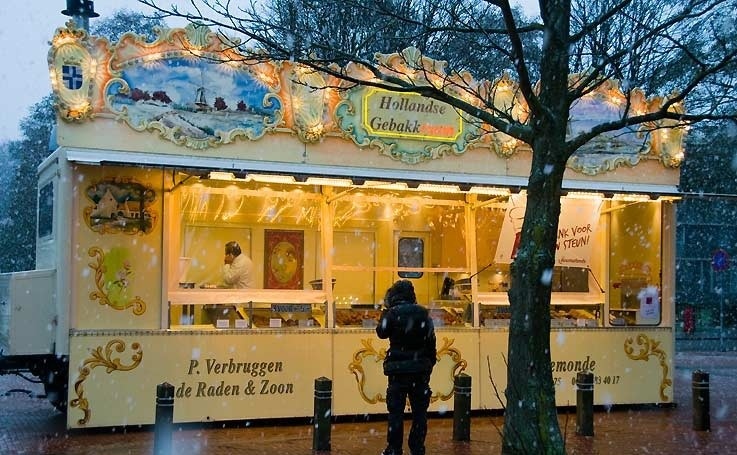
You can buy yourself some sugary warmth at the many quaint stalls that line the town squares in Holland & Belgium, and waft invitingly through the cold Fall & Winter air. Especially during the times the ‘kermis’ or fair is in town, or the annual Christmas Markets that start showing up in late November, both of which add much needed light & coziness to the short, dark evenings. I mean, just look at it:

20130807-213146.jpg
Doesn’t it look all warm and beckoning?

I figured that if I wanted ‘oliebollen’, I would have to learn to make them at home since Los Angeles is short on this kind of campy quaintness… and who can wait for the county fair to arrive… in July! No. I needed to have access to this greasy happiness in Fall & Winter, when evening temperatures drop well below 65F. Don’t judge.

I’ve probably spent too much time browsing the Internet for the perfect recipe, but the winning recipe came from a former colleague of mine, who was tasked by yours truly with the impossible mission of seducing prying the recipe out of our favorite ‘oliebollen‘ baker from the city fair in Ghent. I completely forgot about these, until I recently found her grease-stained email folded neatly in a cookbook of mine… Enjoy!

20130807-215157.jpg

OLIEBOLLEN
(aka Flemish beignets… per Marktkramer De Kuijper‘s recipe)
– 1.5 oz of good quality unsalted butter
– 10.5 oz of self-rising flour (or pastry flour or all purpose flour, if you can’t find self-rising flour)
– 1 oz of fresh yeast (or 0.5 oz of dry active yeast)
– 8 oz of whole milk
– 1 tsp of natural vanilla extract
– a pinch of salt
– 1.5 eggs (2 whites + 1 yolk)

Make sure to use room-temperature ingredients, and measure everything precisely!

In a large bowl, sift flour. In a small bowl, crumble fresh yeast into milk, and stir until dissolved. Add yeasted milk & vanilla extract to flour, and stir to create a batter.

Melt butter in the microwave on medium power, and add egg yolk and butter to batter. Stir until well combined.

Beat egg whites in a grease-free bowl until stiff peaks form. Gently fold into the batter, and also add a pinch of salt.
The batter should be fairly loose, so if it feels a bit too stiff, add a splash more milk.

Let the batter rest for 20-25 minutes while you fill a large Dutch oven with peanut oil and heat it to 375F. Use a candy thermometer to make sure the oil doesn’t overheat, which causes uneven cooking.

Use an ice cream scoop to drop 2-3 scoops of batter into the hot oil at a time. Cook each side until golden brown. Doughnuts will cook very quickly in the right temperature oil, so check them quickly after you place them in the oil. Flip and cook the other side. Don’t crowd your pot, as this will cause the temperature to drop too rapidly, causing uneven cooking and can potentially cause your pot to overflow, which is dangerous!

Use a spatula to take the beignets out of the oil and let them sit on a paper towel lined plate for a minute or so, to absorb the excess oil. Transfer to a plate in a warm oven while you cook the rest of them.

When done, dust with powdered sugar and prepare to eat more than one!

Sinful Chocolate Truffles

7 Aug

What could possibly be wrong with a sumptuous mouthful of cream, chocolate and butter? If your genetic profile is anything like mine, there’s a lot wrong with these delicious truffles. As a matter of fact, I might as well bypass my digestive system completely and stick these directly onto my hips and thighs, since I’m incapable of eating just one. Who can, really?

Belgium’s love affair with chocolate ‘pralines’ & truffles traditionally unfolds at various quaint country tables, adorned with one’s best china and grandma’s hand-embroidered floral table cloth. Neighbors and friends eagerly gather around to catch up on the latest small town gossip, and to reconcile important town data such as who is getting married to whom and what was it that Marie overheard whilst standing in line at the butcher’s? To facilitate these impromptu social gatherings, a pot of freshly brewed coffee is there to loosen the tongues and the sugary sweetness of truffles is presented to melt away the bitter shock of hearing that the elderly pastor now has a pretty new housekeeper… and why is she so young? Not proper, I say.

Coffee is consumed by the liter in rural Flanders & beyond. You can’t ring someone’s doorbell without being beckoned to sit down at the kitchen table and have an unsolicited cup of joe appear under your nose within the first 5 minutes of entering, usually followed by an invitation to grab something from a box of sweets that permanently lives in the middle of the table. To my mom’s generation, a knock on the door holds the promise of an exciting bit of town gossip and one must be prepared for this kind of opportunity 24/7. No Belgian household is without coffee or chocolate. It’s just not proper.

When I first moved to the USA, glitzy Los Angeles of all, I remember that random people I had never seen before would wave at me enthusiastically on the street or greet me with a smile during my visits back to small town Belgium. It later dawned on me that my move to ‘Aahhhh-merica’ must have been the topic of conversation during many such coffee-orgies, undoubtedly piquing the interest of people who did not know Cecilia’s brave and/or adventurous daughter yet. I’m sure the news of ‘Helga-sightings’ spread fast within the community, like I was some sort of rare caribou one had to look out for. My mother’s main agenda for my visit back home was to cram in as many coffee gatherings as a week would allow. The upside of this was homemade cookies & Leonidas truffles at each one…

The truffle recipe below is an old-fashioned, artisan recipe I found online years ago. I tweaked it for flavor & richness of texture, but it’s fairly authentic and you can proudly serve these in a bowl… on your granny’s hand-crocheted doily. For good measure.

20130807-125949.jpg

BASIC TRUFFLES
For the ganache:
– 8 oz of dark chocolate
– 4 oz of heavy whipping cream
– 2 oz of good quality unsalted butter

For the coating:
– 4 oz of dark chocolate, melted
– ½ cup of semi-sweet cocoa powder

In a bowl, break chocolate into bite-size pieces and set aside. In a small sauce pan, heat heavy whipping cream over a medium heat until very hot. Add butter and stir until butter is melted. Then pour hot cream mixture over chocolate pieces and stir until all chocolate is melted and you achieve a smooth mass. Place a piece of plastic wrap directly onto the surface of the chocolate mass, and refrigerate for a few hours until ganache is set.

When cold and stiff, take ganache out of the refrigerator. Using a double-boiler method, melt remaining chocolate for coating in a small saucepan. When melted and cool enough to handle, scoop small balls out of the ganache and gently coat them with the melted chocolate. Needless to say, coating the truffles is by far the messiest part of this recipe, but there’s no avoiding it so you might as well enjoy the mess. The best way to coat the truffles, is by gently rolling them around in the melted chocolate, using a chopstick or toothpick.

When coated, immediately take them out of the melted chocolate with a toothpick and roll them in a coating of your choice. Traditionally, semi-sweet cocoa powder is used, but you can also use chopped nuts, chocolate sprinkles, chocolate shavings, coconut flakes.. whatever you fancy, really.

Place the coated truffles on a parchment lined plate, and let harden in the fridge a little before serving.

ORANGE GRAND MARNIER TRUFFLES
Use basic truffle recipe above, and add the following in the ganache:
– 1-2 Tbsp of Grand Marnier or Cointreau liquor
– 2 Tbsp of freshly grated orange zest

Coat truffles with semi-sweet cocoa powder.

IRISH TRUFFLES
Use basic truffle recipe above, and add the following to the ganache
– 1-2 Tbsp of good quality Whiskey
– 2 Tbsp of very strong coffee

Roll truffles in white chocolate shavings.

WHITE CHOCOLATE TRUFFLES WITH HONEY & SAFFRON
Use basic truffle recipe above, but replace dark chocolate with white chocolate. Add the following to the ganache:
– a pinch of saffron
– 1 Tbsp of honey
– a splash of white rum

For the coating, use melted white chocolate and roll truffles in powdered sugar, unsweetened coconut flakes or very finely chopped almonds

20130807-130803.jpg

Pink Grapefruit & Limoncello Mousse

6 Aug

Last time my mom visited from Belgium, I randomly asked her if she still remembered those little cups of yogurt mousse she used to buy for us by the dozen. We were on our way to ‘Surfas’ kitchen supply store in Culver City, in search of organic black squid ink – don’t ask! There was nothing in particular that sparked my question, so it is entirely possible that I overwhelmed her with the randomness of it, but mom firmly stated that she had no idea what I was talking about and quickly concluded that I must be remember things wrong, because mom is always right… even when she’s wrong. It’s a Flemish miracle, really, and one that should be recognized by a ribbon from the Pope and possible sainthood.

I know that I didn’t dream up this deliciousness, because I still remember exactly what the packaging looked like and I remember that this fluffy delight came in lemon, strawberry and blueberry flavor. The tart, sweet lemon flavor was by far my favorite, and I recall I would secretly re-shuffle the containers in the fridge so that the lemon ones were always hidden from plain sight in the back of the fridge, thusly, increasing the odds of saving them for yours truly by 200%. I was stealth like that.

Besides custards, mousses are my next favorite dessert things. I love their airy, light fluffiness. It was only recently that the idea of a pink grapefruit mousse slapped me in the face, when I read an article about how incorporating this fruit into your daily diet promotes weight loss… and what better way to do it than with dessert? Right?

Yeah.

I’m sure this is not what the author had in mind, but whatever. Don’t rain on my culinary parade, please.

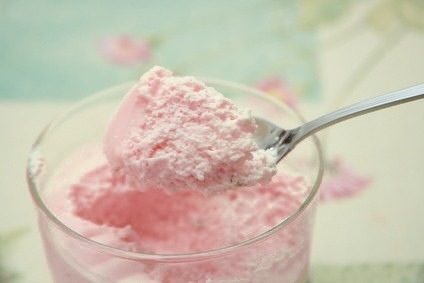
20130806-110645.jpg

PINK GRAPEFRUIT & LIMONCELLO MOUSSE
(Adapted from a variety of mousse recipes)
– 2 ruby red or pink grapefruit
– 6 oz of thick Greek yogurt
– 7 oz of heavy whipping cream
– 2 Tbsp of limoncello (or another citrus-flavored liquor)
– 3 egg whites
– a pinch of salt
– 4 sheets of gelatin
– 2 Tbsp of sugar

Place gelatin sheets into a bowl of cold water and allow it to swell. When gelatin is soft, pour cold water out of the bowl and add 2-3 Tbsp of very hot/boiling water and allow swollen gelatin to melt. Let cool slightly while you prepare the other ingredients.

Juice both grapefruits and strain juice so all fleshy bits and pits stay behind. Combine clear grapefruit juice with limoncello. Fold sugar into yogurt, and add juice. Beat yogurt mixture with handheld mixer until well-combined and somewhat fluffy. Taste for sweetness, if it’s too tart, add a bit more sugar.

Beat heavy whipping cream until it is firm & fluffy, but not super stiff. Fold it gently into the yogurt mixture, together with the lukewarm melted gelatin.

Beat egg whites with a pinch of salt until stiff peaks form, and gently fold these into the yogurt/cream mixture. Try to keep the air in the egg whites, as this will give your mousse a light, fluffy texture.

Divide mousse over 6 ramekins or small glasses, and allow to set in the refrigerator for at least 2-4 hours.

Belgian Rice Pudding with Saffron

5 Aug

‘Rijstpap’ or rice pudding is a much celebrated treat in Belgium, and it’s no coincidence why this rice dessert became a traditional regional dish in the Province of Brabant, encompassing the central heart of Belgium.

Every year in Flanders, from small rural towns to larger cities, this creamy dessert makes a star appearance during the annual ‘Brueghel Feesten’. These medieval-type festivities compare to the American renaissance fairs, but traditionally focus around food & drink whilst celebrating Flemish cultural heritage and the world-renowned artwork by ‘Master Painter’ Pieter Brueghel. During the 16th Century, Breughel’s work was highly sought after by the wealthy elite of the richer cities, and the humble ‘peasant’ painter was warmly embraced & respected in the high society circles of thriving medieval Brussels. His works mostly featured magnificent landscapes and bustling farm village life, often painted with a comical yet honest approach and illustrating the abundant food & drink at the festive farmers’ table in great detail. Since then, the often 2-day long ‘Breughel Feesten’, for which people dress up in traditional 16th Century peasant grab, are synonymous to copious amounts of free-flowing ‘tap’ beer, fantastic food and… plate after plate of creamy golden ‘rijstpap’.

Rijstpap made an appearance early on in Flemish history, and quickly became associated with rural life and heavenly simplicity. After all, as per an old Flemish folkloric saying, heaven welcomes you with bottomless bowls of rijstpap and golden spoons. I can’t testify to the veracity of this tale, but I’m on board!

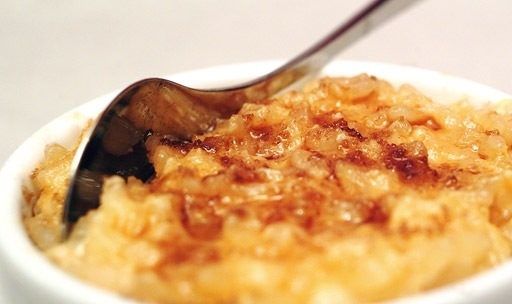
This sweet, milk-based porridge bears somewhat of a resemblance to American rice pudding, but not entirely. For starters, a traditional Belgian rice pudding is spiced with saffron & cinnamon, and not just vanilla. Secondly, the texture is more porridge-like (‘rijst’ meaning rice, and ‘pap’ meaning porridge) and not quite as sweet or sugary as a pudding. And lastly, the dessert is classically eaten with a hefty dusting of dark brown sugar, that slowly melts into a molasses-type syrup when it blends with the milky rice. It’s ridiculously good and it brings back many happy childhood memories of the ‘Brueghel Feesten’ for me…

20130805-144353.jpg

Belgian Rice Pudding
(As per a childhood recipe)
– 1 liter of whole milk (or approx. 32 fl oz)
– 4 oz of long grain, white rice (dry)
– 1 vanilla bean
– 1 stick of cinnamon
– 1-2 hefty pinch(es) of saffron (if you like the flavor & color of saffron, use 2. If not, use 1)
– 5 Tbsp of sugar

Add the milk, rice, and sugar in a heavy pot and bring to a simmer over medium heat, stirring occasionally with a wooden spoon to separate the grains. Add the cinnamon stick, vanilla bean and saffron threads, cover and simmer over very low heat for 30 minutes or more, until the rice is tender and has absorbed the milk. Do not stir the rice during this part of cooking.

Stir with a wooden spoon when rice is tender, to spread the saffron color evenly.

Discard the cinnamon and vanilla, scoop the rice pudding into small bowls and allow to cool completely. Sprinkle with dark brown sugar before serving.

Rose Water & Lemon Turkish Delight

4 Aug

Yesterday evening, I drifted into a beautiful Pinterest dream and stumbled upon picture after picture of gorgeous Polish and Turkish pottery.

There are times where I reminisce about my life in Belgium with somewhat of a pang of homesickness in the pit of my stomach, and seeing that beautiful pottery made me miss the Turkish markets in my town there. Compared to so much cultural history and ‘couleur locale’ (local ‘color’), California seems sterile at times, despite the Hispanic and Asian influence we’re inundated with over here. It’s not the same. I miss the public open-air markets in Belgium. They usually run once a week and are set up like our farmers markets over here, just with a lot more variety in goods and tremendously more local color. They bring together a variety of people, from the old bitties to the young hipsters, all in search of hot waffles and exciting market finds. The many vendors or ‘markt kramers’ are celebrities on their own turf, luring customers by loudly broadcasting their wares in a thundering voice and colorful language, or blatantly flattering the female population in hopes of piquing their interest. Market days were fun, even when temperatures dropped to single digits and rain puddles formed alongside the cobblestone streets.

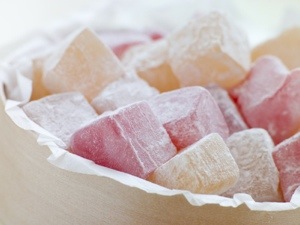
One of the things I would regularly indulge in whilst browsing around on market days, was delicious ‘lokum’ or Turkish Delight. Sweet, gooey & soft, it was the perfect kind of treat to reward yourself with after a busy morning at the market, or to make you forget you’re entering your fifth week of nonstop pounding rain & howling wind. Paired with a hot cup of mint tea, it brings a bit of Oriental flair into your home and you can pretend you went shopping at the ‘casbah’ or Turkish bazaar.

Turkish delight is easy to make. It’s traditionally flavored with rose water, like marzipan, but you can add whichever flavoring you prefer. I prefer the authentic rose water flavor, but I add in some fresh lemon juice as well. You could even add in some pistachio nuts, fresh mint leaves or a pinch of saffron. The possibilities for these gelees are endless.

20130804-091653.jpg

ROSE WATER & LEMON TURKISH DELIGHT
(Makes approx. 60 pieces)
– 1 2/3 cups of cold water
– 7 tsp of unflavored gelatin (approx. 4 packages)
– 2 1/3 cups of sugar
– 3 Tbsp of freshly squeezed lemon juice, strained
– 4 tsp of rose water
– 2 drops of red food coloring
– corn starch
– vegetable oil

Brush a 8x8x2-inch non-stick metal pan with the oil. Place 2/3 cup of water in a small bowl, and sprinkle gelatin in it. Set aside until gelatin softens, approx. 15 minutes.

Combine remaining 1 cup of water, sugar and lemon juice in a heavy medium saucepan. Stir over medium heat until sugar dissolves and syrup boils. Cover, increase the heat and boil 3 more minutes.

Uncover, attach a candy thermometer, and boil until temperature reaches 238F, which should be about 5 min.

Remove pan from the heat and add in gelatin mixture, store until completely dissolved. Mix in the rose water and food coloring (*), and pour into oil-brushed prepared pan. Let stand at room temperature until set, about 4 hours. Cover and chill overnight.

Cut candy into small squares and completely coat with corn starch. You can keep these in the fridge in an airtight container for approx. 1-2 weeks.

(*) Food coloring is strictly for color only and you can leave this out or add as much as little if you desire. You can also play around with different colors.

Mama’s Tiramisu

3 Aug

In my post about lasagna, I’ve hinted before that mom was mystifyingly Italian, for a Belgian. While she not only was is a passionate believer in enhancing verbal communication with dramatic facial expressions and/or hand gestures, she also prepared certain Italian staples like a real ‘Mama Gina’, with ‘passione’ and the prerequisite matriarchal dominance of the kitchen quarters.

As a child, I recall there were many times I’d be perched on the kitchen counters, intrigued by the tantalizing smells and mom’s busy activity, but there were an equal number of times where our mere presence in the kitchen would catapult her into a peppered tizzy and we instinctively knew to keep our distance. On ‘tiramisu-days’, we’d be lucky if we were even allowed to stand in the doorframe and watch… And even then, the sight of us would often result in an annoyed hand gesture and a quick dismissal, as though tiramisu was top secret and you needed special Governmental clearance before you could watch.

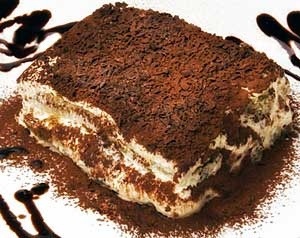
I’m not even sure where mom got the recipe below from, but if you’ve ever had the opportunity to savor the ‘real thing’ from a sun-drenched patio in Napoli, you’d instantly recognize that mom was on to something with this recipe. It’s so creamy and velvety, that the first bite of this deliciousness sends you straight to a cobblestone piazza somewhere in Rome. Furthermore, tiramisu is so easy to make, it should be a mortal sin, really.

While it takes some advance planning since tiramisu needs 8-10 hours in the refrigerator, it’s a ‘no bake’, foolproof dessert that is a real show-stopper. Heck, even your teenage daughter may briefly forget about your ‘lameness’ and kiss you on the cheek for this one. And wouldn’t that be worth it???

20130803-083535.jpg

MAMA’S TIRAMISU
(As per my mom’s top secret instructions… Sshhh!!!)
– 10.5 oz of ladyfinger cookies (*)
– 9 oz of mascarpone
– 3 eggs, yolks & whites separated
– 3.5 oz Amaretto liquor
– 7 oz of very strong cold coffee (coffee that is so strong, you can’t drink it!)
– 2 Tbsp of golden brown sugar
– 1/3 cup of sweetened cocoa powder (Nesquick works great!)
(*) The trick to a great tiramisu is using ‘real’ ladyfinger cookies like they sell in most of Europe. They are crunchy and light, and dusted with a bit of crystal sugar on the outside. The American ladyfinger cookies are too ‘cakey’ and not crunchy at all. If you can’t find Italian ladyfinger cookies or ‘savoiarde’, use Nilla wafers instead.If you don’t know what ladyfinger cookies look like, you can see some of them in the picture of my chocolate mousse post.

Beat egg yolks, mascarpone and sugar into a smooth consistency with your electric, handheld mixer.
In a clean, oil free bowl, beat egg whites into stiff peaks and gently fold into the egg/mascarpone mixture by hand.

Combine coffee and Amaretto liquor.

Take a 9×13 oven dish (or similar in size). No need to butter or flour, because this is a no-bake dessert!

Dip ladyfinger cookies quickly in coffee mixture one-by-one, and place in a single layer on the bottom of the pan. Don’t make the mistake I made once and drop your entire package of cookies all at once in the coffee, as you will not have enough time to take them out and they’ll disintegrate into a sloppy coffee mess before your thy very eyes. You need to really do this one by one, and dunk ’em, don’t let them ‘sit’ for too long in the liquid, as they will start to fall apart.

When you’ve completed a layer of coffee-dunked cookies, spread a 1/4 thick layer of the mascarpone mixture over the top with a spatula. Place another layer of coffee-dipped cookies on the top, and repeat this process until you reach the top of your pan. Finish with a layer of the mascarpone mixture.

Dust the top layer of the mascarpone mixture liberally with the powdered cocoa, cover and refrigerate overnight or for at least 8-10 hours. This will allow the cookies to soften and absorb the creaminess of the mascarpone. In the morning, the cocoa on the top will have melted into a shimmering layer of chocolatey goodness. If you like, you can sprinkle some shaved milk chocolate over the top right before serving.

Now go and make this. Do it now. Really, your family will love you.

Jozefa’s Chocolate Mousse

2 Aug

Hershey’s chocolate syrup. Blech!

Not to trample on an American staple, but telling me that this overly sweet and unnaturally flavored syrup tastes like ‘chocolate’, is like telling me that fried pork rinds are wholesome. I fully comprehend the nostalgia behind Hershey’s syrup and, just like Velveeta, I believe there’s a place for it in our culinary repertoire, but let chocolate mousse not be part if it. OK?

Alright. I’ll come right out saying that I’m a bona fide chocolate snob. I’m Belgian, you can’t hold it against me, really. I’ll take Swiss chocolate as a close second, and San Francisco’s Ghirardelli as a third, if all else fails and I’m at imminent risk of turning into a brooding murderous harpy during that time of the month. If it’s any consolation, British Cadbury ranks right down there with Hershey’s as well in my book. Don’t get me wrong: I love America. I will defend America vehemently in cultural debates with my European friends. I love baseball, Texas BBQ and bull riding. Just not American chocolate.
I think one of the worst chocolate experiences I’ve had in this country was a chocolate mousse I ate at a little bistro in Morristown, NJ several years ago. It wasn’t per se horrible but it definitely wasn’t ‘chocolate’ what my taste buds were concerned. And it certainly wasn’t anything like the chocolate mousse my grandma used to make, but then again, Jozefa set the bar way high.

With my hips arbitrarily expanding from a size 12 to a size 16 at the mere sight of dessert in the blink of an eye, I try to watch what I eat but let me be clear: there’s a time and a place for everything, and dessert is no place to skimp on butter, cream and/or sugar. As a matter of fact, I’d rather not have dessert at all if I can’t have the full fat stuff. My grandma understood this too and her chocolate mousse would have earned her a ribbon from the Pope. It’s that good! So without further ado, I must bring her genius into this world and spread the love.

20130802-114407.jpg

JOZEFA’S CHOCOLATE MOUSSE
(My grandma’s recipe for a perfectly delicious chocolate mousse!)
– 8 oz of good quality semi-sweet dark chocolate (the higher the cacao %, the better!)
– 1.5 cups of heavy whipping cream
– 6 eggs, yolks & whites separated
– 3.5 oz of sugar

Melt chocolate ‘au bain marie’, aka a double boiler, until completely liquid. In the meantime, beat egg yolks and sugar into a firm, light pale foam. Add liquid chocolate to the yolks, and fold everything together by hand.

In a clean & oil-free bowl, beat the egg whites into stiff peaks. Then gently fold the egg whites into the chocolate mixture by hand, making sure not to break the air bubbles in the egg whites too much. Do this slowly and gently, until everything is well combined.

In a bowl, beat cream until fluffy but still runny. Don’t overbeat, or you’ll end up with stiff whipped cream! You want the cream to be fluffy and somewhat airy, not stiff. Fold cream into chocolate mixture by hand. Divide over 6 bowls and place in refrigerator for at least 6-8 hours to stiffen.

HELGA’S GROWN-UP HAZELNUT AMARETTO MOUSSE
(Adapted from my grandma’s chocolate mousse recipe above)
– 4 oz of good quality dark chocolate
– 4 oz of gianduja chocolate (*)
– 1 cup of heavy cream
– 3 Tbsp of Amaretto liquor
– A splash of pure hazelnut extract (or hazelnut liquor like Frangelico)
– 6 eggs, yolks & whites separated
– 3 oz of sugar
(*) Gianduja is a firm, Italian chocolate bar made from ground hazelnuts and milk chocolate. You can usually find bars of gianduja chocolate at your local Italian delicatessen. If you cannot find gianduja chocolate, replace it with Nutella, but drop cream down to 3/4 cup.

Melt all chocolate ‘au bain marie’, aka in a double boiler, until completely liquid. In the meantime, beat egg yolks, amaretto, hazelnut extract and sugar into a firm, light pale foam. Add liquid chocolate to the yolks, and fold everything together by hand.

In a clean & oil-free bowl, beat the egg whites into stiff peaks. Then gently fold the egg whites into the chocolate mixture by hand, making sure not to break the air bubbles in the egg whites too much. Do this slowly and gently, until everything is well combined.

In a bowl, beat cream until fluffy but still runny. Don’t overbeat, or you’ll end up with stiff whipped cream! You want the cream to be fluffy and somewhat airy, not stiff. Fold cream into chocolate mixture by hand. Divide over 6 bowls and place in refrigerator for at least 6-8 hours to stiffen.