Chili con Turkey

22 Jul

It seems ‘June gloom’ has finally arrived in coastal Los Angeles. Yesterday morning, we even got a few sprinkles of rain. I know. Shocking!

The gloomy weekend reminded me of the dreary, cloud-laden skies that blanket Belgium for a good portion out of the year, and all those times I’d cycle back home from school in fog & drizzle. Being outside in the rain is a natural state of being in Belgium. Unlike here in Southern California where even the slightest drop of rain causes widespread panic, life goes on and the world barely skips a beat. Even during school recess, I remember we’d play outside in the rain and were handed a towel to dry off when re-entering the class room after we’d taken off our boots, shuffling & sliding back to our desks on socks alone. Beautifully sunny days are scarce and – as such – they are worshipped like the Holy Grail. People swarm to the beach with their brood in one hand and an ice box in the other, or they soak up the rays over a few ice-cold beers on a sun-drenched café terrace, dotted with colorful umbrellas. I remember when I first arrived in California, I didn’t do laundry for 5 weeks straight, because it was always sunny in the weekend and on sunny weekends you simply don’t occupy yourself with mundane household chores… It later dawned on me that all weekends are sunny here, and unless I didn’t mind wearing my bikini to work, I had better get some laundry started. Pronto.

Yesterday was one of those typical dreary Belgian days by the California beach. It was a welcome change of pace from the heat wave we got the previous week, and a perfect opportunity to cook something hearty while smelling the dampness in the coastal air. Turkey chili & corn bread sounded like just the ticket.

chili 2

TURKEY CHILI
– ½ cup of diced pancetta (or 2-3 slices of bacon, chopped)
– 2 medium onions, diced
– 1 red bell pepper, ribs & seeds removed, diced
– 1 orange bell pepper, ribs & seeds removed, diced
– 1 lbs of ground turkey
– 1 15oz can of kidney beans, rinsed
– 1 15oz can of pinto beans, rinsed
– 1 15oz can of black beans, rinsed
– 1 28oz can of pureed tomatoes
– 2 15oz cans of diced tomatoes
– ½ tsp of ground cinnamon
– 1 tsp of unsweetened cocoa
– 1-2 peppers in adobo sauce, chopped (or more, if you like it spicier)
– 3 tbsp of chili powder (whichever kind you prefer)
– 1 tbsp of chopped fresh oregano (or ½ tbsp of dried oregano)
– 1.5 tbsp of ground cumin
– salt & pepper, to taste
– a few tbsp of ground masa flour, to thicken the chili if it’s too runny.

Pour beans into a strainer and gently rinse under cold water until no longer gooey. Set aside and let drain.

Brown pancetta or bacon in a large, heavy pan (or cazuela) until most of the fat is rendered. Remove & set aside. In the pancetta/bacon fat, sauté the onions until starting to soften. Add chopped bell peppers, and sauté a few minutes more until onions are turning translucent. Add ground turkey meat and sauté until browned and crumbly. Add salt & pepper to taste.

Add rest of the spices (except cinnamon & cocoa) and the chopped peppers in adobo sauce, and sauté for a minute more, just to release the flavors. Add pureed & diced canned tomatoes, and bring to a boil. Let everything simmer for another 10-15 minutes and thicken the sauce with the masa flour 1tbsp at a time, if needed.
Add cinnamon, cocoa, beans & browned pancetta/bacon, and fold everything together into a thick stew. Simmer for another few minutes to heat through.

Serve with sour cream, diced red onions, chopped fresh cilantro & shredded cheese… and yummy Cheddar jalapeno cornbread
Mustard-crusted Pork Tenderloin with Balsamic Blueberry Reduction

21 Jul

Pork tenderloin or ‘varkenshaas’ is quite common in Belgium. We house many pig farmers near our coastal plains and the rural Ardennes in the South, and pork makes a frequent appearance in Flemish & Walloon cuisine. Pork is often served alongside a fruity ‘compote’ or warm, chunky fruit stew typically made from apples, rhubarb or apricots. It seems Belgian cuisine tends to favor fruity additions to savory dishes, and to date, I still like the sweetness fruits give to hearty stews or braised meats.

The problem with pork is, is that it often turns out a bit dry and flavorless. It doesn’t help that for years America’s preoccupation with food safety had everyone convinced that you have to cook pork until it’s well-done, and that’s a sad myth. It gave pork a bad reputation. While you shouldn’t eat pork raw, it’s perfectly safe to cook it to medium doneness, so it’s still juicy and a bit rosy on the inside.

Roasted into a tangy, caramelized feast and paired with a fruity sauce, pork is delicious! Below is my take on this Belgian classic.

20130721-103909.jpg

BALSAMIC BLUEBERRY REDUCTION
(adapted from a recipe by ‘Het Waterhuis’)

– 2 cups of fresh or frozen blueberries
– ¼ tsp chipotle powder
– ½ cup applesauce
– 2 Tbsp whole-gain mustard
– ½ an orange, zested and juiced
– 1 Tbsp balsamic vinegar
– 1 Tbsp agave syrup
– ¼ cup low sodium chicken broth, more if needed
– ¼ tsp freshly ground nutmeg

In a medium sauté pan, add all of the ingredients and let simmer for 10-15 minutes. Meanwhile, prepare the meat. If the consistency is too thick, add a little more chicken broth.

MUSTARD-CRUSTED PORK TENDERLOIN
Mustard-Crusted Pork Tenderloin
– 1 ¼ lbs pork tenderloin
– 1 ½ Tbsp whole-grain mustard
– salt and pepper, to taste

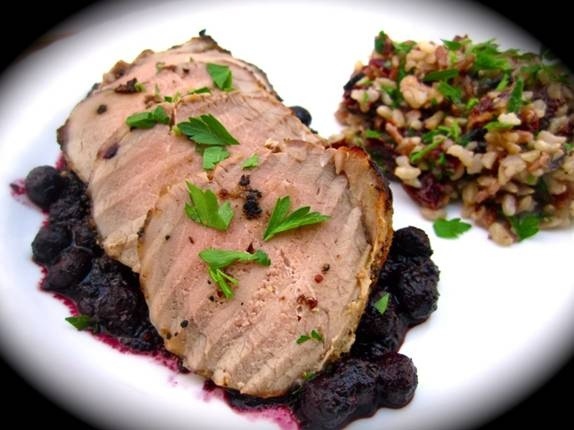
Rub salt and pepper on the tenderloin, then add the whole-grain mustard and coat all sides. On a foil-lined baking sheet, place the pork tenderloin under the broiler and rotate every 3-4 minutes, until the internal temperature reads 135F for a tender medium rare. Let it sit for 5 minutes before serving. Slice into medallions and serve with Balsamic Blueberry Reduction.

Vanilla Crepes

20 Jul

Who doesn’t like crepes? They’re a culinary hit no matter where you find yourself in the world. I believe crepes are originally French, but they’re very much a staple in Belgium as well. Millions of breakfast tables are adorned with a steaming stack of hot, buttery crepes every day, and an equal number of eager wee little fingers clumsily spread butter, jam or sugar on them as we speak. Crepes or ‘pannekoeken’ are not just for children, though. As a matter of fact, many Belgians will often gather with friends or family at their local coffee shop or ‘koffiehuis’ on dreary grey afternoons, and catch up on life and kids over a steaming hot cup of coffee and a freshly baked crepe or crispy waffle. It’s as much part of everyday life in Belgium as it is to run your car through any kind of drive-thru here in America.

Crepes are easy to bake, albeit a bit finicky and perhaps an acquired skill. Despite of what kitchen supply stores want you to believe, you actually do not need any sort of specialty crepe-making equipment. My grandma Jozefa used a regular pan, and her recipe has long been praised as the standard in crepe-baking.

20130720-084918.jpg

VANILLA CREPES
(adapted from a recipe by my omoe Jozefa)
– 7 oz of pastry flour or self-rising flour
– 4 eggs
– 2 cups of whole milk
– 3/4 oz of butter
– 2.5 oz of white sugar
– 2 vanilla beans

Melt the butter and combine with flour, eggs, milk & sugar. Split vanilla beans and with the tip of a knife scrape out the seeds. Add vanilla seeds to batter. The batter should be a thick liquid, that can easily be swirled or poured.

In a non-stick lightweight pan, heat a teaspoon of peanut oil until your pan is very hot. Depending on the size of your pan, pour about 1/3 cup of your batter in the pan and immediately swirl it around so you get an even, thin coating. Use a bit less for smaller pans, a bit more for larger pans. You want to achieve a thin pancake or crepe.

Crepes cook quickly, and you’ll notice tiny bubbles appear on the top within a matter of 1-2 minutes. When you see these tiny bubbles or air holes, it’s time to flip your crepe and cook the other size. Loosen the edges and use a spatula to flip your crepe, or go ‘pro’ and try to flip it in the air.
Don’t be alarmed if your first crepe came out a mess. Every Belgian knows the first one is always a dud!

Serve with butter, sugar, honey or jam. They’re delicious hot or cold.

Blind Finches

19 Jul

OK, so the title of this dish is a bit odd, but let me make it perfectly clear that we’re not actually eating blind or headless birds here. There. I’m glad we cleared that out of the way.

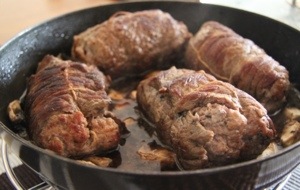
Blind finches or ‘vogeltjes zonder kop’ (isn’t Dutch a romantic language?), are tender rolls of seasoned ground beef & veal or pork that are enveloped in a jacket of thinly sliced beef. They’re the Flemish equivalent of Italian ‘Braciole’, really. Usually seared in a hot pan & browned to a crisp on the outside, blind finches are then left to braise in a hearty concoction of brown beer, onions & thyme. Served with mashed potatoes, this dish is Belgian comfort food at its best.

My older brother Bert & I absolutely loved it, and the dish was a frequent request in mom’s weekly menu rotation… that is, until Satan Bert – in a sly effort to secure a larger portion of the beloved dish for himself – successfully convinced me that I was actually eating blind, headless dead birds, and – for good story-telling measure – would add drama by describing in detail how the fated birds would often cry for their feathery friends when captured. It left a serious mark on my sensitive wee little soul and I hated ‘vogeltjes zonder kop’ from that day forward… I think we went a couple of weeks of me stubbornly snubbing blind finches, but mom caught on pretty quickly that Bert’s mischievous hand was in this and set the record sraight.

Every respectable butcher in Belgium sells pre-assembled blind finches that are ready to be sautéed, but the concept remains elusive in my Californian neck of the woods. The recipe below includes instructions on making the beef roll-ups yourself, just in case in you can’t find them at your local butcher or grocery store.

20130719-122029.jpg
BLIND FINCHES
(as per Cecilia, my mother)
For the blind finches:
– 1 lbs of ground beef (93/7) + 0.5 lbs of ground veal or pork, for 6 individual finches
– 6 pieces of thinly sliced sirloin, to wrap the finches in (*)
– 1 shallot, finely chopped
– 1 clove of garlic, minced
– a handful of chopped parsley
– salt & pepper, to taste
– kitchen twine
(*) You can ask your butcher at the grocery store to thinly slice a sirloin roast for you into aprox. 3×5 inch slices, or approx. the size of a small taco-sized tortilla. Keep in mind that you just want to be able to wrap your rolls of ground beef in them, so the slices should be thinly cut so you can easily fold them and wrap them.

Melt 1-2 tbs of butter in a heavy pan (cast iron works best here) and sauté the garlic and shallots until translucent and soft. Set aside and let cool until able to handle with bare hands. Don’t wash pan, we’ll be using it later! In large mixing bowl, add ground meats, parsley and chopped shallots, and mix until well combined. Add salt & pepper to taste.
Lay out thin slices of sirloin, and divide ground beef evenly over each piece. Roll them up (like a mini-burrito) into tight little cylinder-shaped bundles and tie together with kitchen twine so they don’t fall apart whilst cooking. Salt & pepper the outside, to taste.
It goes without saying that you can pretty much put whatever you like in the ground meat mixture, I’ve cooked them before with some diced pancetta in them too…

For braising:
– 1 to ½ bottle of smooth dark beer (no IPA’s or other ‘bitter’ tasting beers!)
– approx. 1 cup of beef stock
– 2 small onions, diced or chopped
– 2-3 sprigs of fresh thyme, chopped
– 1-2 bay leaves
– 2 tbsp of butter
– 1 tbsp of cooking sherry

In the same heavy pan that you browned the shallots in, heat butter until pan is very hot but the butter is not burning! Quickly brown finches on all sides, being careful not to break the integrity of your bundles. When browned on all sides, douse the pan with the beef stock and beer, and scrape some of the browned bits off the bottom of your pan.
Add the chopped onions, thyme & laurel leaves, and cover the pan. Braise for approx. 20-30 min. until the meat is cooked through.
Remove finches to a plate or serving dish and cover with aluminum foil so they stay hot (or move to a warm 100F oven). Add 1 tbsp of flour + 1 tbsp of cooking sherry to pan sauce, and cook for a few minutes more, allowing the sauce to thicken. Pour sauce over the finches and serve hot with mashed potatoes, stoemp and/or roasted root vegetables.

Animal-style Mayonnaise

18 Jul

My Belgian roots seem to trump any American traits I have adopted over the years when it comes to French fries. For instance, I will not settle anymore for plain old non-flavored coffee, but I still like the creaminess of mayo with my steaming hot & crunchy fries. It’s considered an oddity here in ketchup-loving California, but I bet the epicenter of mayo-based casseroles balmy Southern states share my dipping joy.

So when I was introduced to a California institution named ‘In & Out Burger’ by my American family, and was told with much excitement that this red & gold vinyl circus was the Mecca of all hamburger joints, I was highly disappointed there was not a drop of mayonnaise to be had. At the time, I already had a wee bit of a chip on my shoulder as fast food is not exactly my idea of culinary sophistication, so I may or may not have had a an air of superiority about the whole thing. I plead the fifth. Not being able to drown my fast food sorrow with a vat of mayonnaise, probably put me over the edge. “Try the animal sauce…” , Scott proclaimed, “…you’ll like it”. I’m sure I must have looked at him with an air of complete disbelief, but I aim to please and reluctantly bit the corner of a little plastic pouch of animal sauce, and – with some trepidation – squirted some on a ‘test fry’… I swear, I heard the faint sound of violins and saw rosy-cheeked cherubs blowing kisses in my general direction. Honest to God!

I figured animal sauce can’t be that hard to recreate as my taste buds instantly recognized its delicious mayonnaise base. It was just a matter of adding a few things to it.

I listed a recipe for basic mayonnaise here, as well as my own recipe for In & Out’s animal style hamburger sauce.

20130718-114329.jpg

BASIC MAYONNAISE
– 2 eggs, yolks only
– 1tsp of white vinegar
– 2 tsp of freshly squeezed lemon juice
– 1 tsp of dijon mustard (not the grainy kind)
– 1/2 cup of safflower oil (or cannola oil)
– 1/2 cup of olive oil (or safflower/cannola or any other oil you like)
– salt & pepper to taste

Since mayo is an emulsion, it’s an important to use room temperature ingredients. If you keep your egg in the fridge, take them out about 30-45 minutes prior to making this mayo and let them warm a bit. When at room temperature, separate the yolks and discard the whites. In regards to the oils, olive oil has amore pronounced flavor then safflower or cannola oil, so use light olive oil or any other light oil if you don;t care for the flavor of olive oil.

In a stainless steel bowl, whisk yolks, mustard and vinegar together until smooth. Add salt & white pepper to taste (using blackpepper will leave little flecks of black in your creamy mayo).

Now here comes the tricky part… You will need both hands, so make sure the bowl on your countertop is secured. You can do so by placing it on top of a non-skid mat, or by using a cold damp towel that will hold your bowl in place whil you whisk.

Adding the oil to your egg-mustard mixture is where things can go wrong. Gently and in a steady motion trickle oil into the egg & mustard mixture one drop at a time, whilst whisking constantly. When the emulsion is beginning to thicken, you can go from droplets to a thin stream and so forth. You will need pretty much all of the oil, but when you see it is getting harder to incorporate the oil, it means you are reaching the limit. If this is the case, stop adding oil as otherwise you risk your mayonnaise separating again. If your mixture is not thickening, you are liking whisking too vigorously so slow down a bit. The pace of whisking should be steady, but neither too fast nor too slow… it’s a learnt art!

When you have achieved a beautifully creamy sauce, add the lemon juice and some more salt & pepper to your taste. Enjoy your homemade mayo!

(*) You can also add herbs to flavor your mayo, such as finely chopped fresh tarragon for a French twist, minced garlic for a traditional aioli or a few drops of sriracha sauce for a spicy fiery mayo. The possibilities are endless.

20130718-122648.jpg

ANIMAL SAUCE
(adapted from In & Out Burger)
– 1/2 cup of mayo
– 3 tsp of ketchup (for the recipe, look here)
– 6 tsp of pickle relish
– 1.5 tsp of distilled white vinegar
– 1.5 tsp of white sugar

Whisk all ingredients together and enjoy on a hamburger bun with your favorite hamburger, cheese, lettuce, tomato & onions! Yum!

Piperade Basquaise

17 Jul

Traditionally from the rural Basque regions in Spain & Southern France, I decided that something as delicious as ‘Piperade’ must be honored on this blog. There’s no tie to Belgian cuisine, other than the fairly mundane fact that I ate this in my mom’s country kitchen in our small Flemish country town, surrounded by smelly dairy farms, swarms of potato bugs, cackling poultry and endless corn fields.

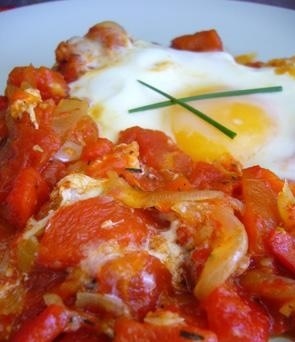
Piperade fits right in this pretty farmers picture. It’s a flavorful and hearty dish that won’t break the bank… unless you live in coastal Los Angeles, but let’s not be cynical about living a mile away from the Pacific Ocean, shall we? In Spain and the South of France, piperade is often accompanied by cubes of grilled Bayonne ham and silky poached eggs, and served alongside hand-torn morsels of brown country bread to sop up the culinary orgasm that is runny yolks blended with ham- and sweet pepper juices. I feel bashful just writing about it.

Since Bayonne ham is not readily available in my coastal settlement, I would probably have to drive all the way to smog city downtown LA in order to score some authentic Basque ham. And trust me when I say that no ham is worth fighting 405 freeway traffic for!

This leads me to tell you that since Bayonne ham has a light smoky flavor, I figured I’d try my luck with pancetta, and… BINGO! I think bacon would work well too, or surely even diced smoked kielbasa. In fact, this is such a versatile dish, that you could completely omit the meat and go vegetarian altogether. Or serve it alongside or on top of crispy browned chicken legs, which I vaguely remember is what my mother did.

20130717-193244.jpg
PIPERADE BASQUAISE
(adapted from multiple recipes I found online)
– 1 medium size red bell pepper
– 1 medium size yellow bell pepper
– 1 medium size orange bell pepper
– 2 medium size onions
– 1/4 cup of extra virgin olive oil
– 6 cloves of garlic, minced
– 1 tsp of Piment d’Espelette (*)
– 1/2 tsp of chopped fresh oregano
– 1 tsp of chopped fresh thyme
– 1 cup of diced pancetta
– 4 large fresh eggs
(*) Piment d’Espelette is a medium hot chili that comes from the Basque town of Espelette. You can find it in specialty food stores, but you can also replace it with hot paprika if you can’t find it.

Cut peppers in half lengthwise, seed, core and slice into thin strips. Cut onions in half and slice into thin strips as well. Mince garlic cloves.

Heat oil in a large heavy pan and sauté garlic and onions until beginning to soften, approx. 3-4 min. Add peppers and sauté until beginning to soften, approx. 5 min. Add bay leaves, piment d’espelette and fresh oregano, and simmer over low heat until vegetables are soft.

In the meantime, dice pancetta and brown in a separate pan. When browned, set aside on paper towel. Deglaze pan with a bit of white wine, and add pan juices to vegetables.

When vegetables are soft, add pancetta & fresh thyme to pan and simmer 3 min more to blend all flavors. Salt & pepper to taste.

Make 4 small spaces in your pan, among the pepper mixture, and drop a raw egg in each space. Turn heat to low, cover and allow egg to cook for 3-4 min until whites are done and yolks are a bit runny still. This will take a little while, so patience is key here. (You can also poach your eggs separately, and serve over the piperade).

Sprinkle with some fresh parsley and serve with crusty brown bread, or over couscous.

Soledad Goat Cheese

16 Jul

I have a confession to make. I just ate lemon-lavender goat cheese for dessert. Straight from the jar. What kind of goat cheese can conceivably be conceptualized as a dessert by taste buds? This kind.

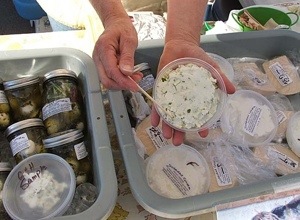
At $6.00 a tub, I used to think Soledad goat cheese was way too expensive, until they roped me in with a sample one day. Ever since that moment, I’ve had pear-walnut-honey goat cheese on raisin toast for breakfast, onion-cucumber goat cheese on rye for lunch, roasted sweet pepper goat cheese stuffed in figs for a snack, regular goat cheese on beet salads, lemon-lavender goat cheese as dessert… Oh dear Lord, help me.

I’m sorry if you live out of Los Angeles County lines, because that means you will likely not be able to drift off into goat cheese nirvana until your next vacation. However, next time you plan a visit, make sure to pencil in a stop at any of our local farmers markets and pick up a tub of their goat cheese.

Apart from making great cheese, the folks at Soledad Goat Farms love their goats. Loved goats give great milk. It’s a happy place.

20130716-195022.jpg

20130716-195050.jpg

Rémy’s Ratatouille (Rat-a-too-ee)

16 Jul

So…how many of you saw the title and instantly wandered off to romantic Paris in their mind, with its cobble-stoned rues and fresh baguettes? Right? A few Christmases ago, my sweetheart surprised me with Pixar’s ‘Ratatouille’, and I instantly fell in love with it for more reasons than just the adorable rat Rémy and the equally as lovable man who gave me the movie in the first place. I loved it because it teaches us a very simple but important lesson in life: no matter who you are or where you come from, there’s always something wonderful around the corner when you follow your passion. Aw.

Now the thing is, there’s nothing even remotely Belgian about ratatouille. It’s a dish straight out of French cuisine, Provence to be precise. As children, my brother & I spent many Summer vacations in our family’s sweltering caravan, on a dusty campground at the Cote d’Azur. How lucky were we?
Ratatouille is reminiscent of the flavors of my childhood vacations, so it has a special place in my heart, right next to the smell of gasoline and roasted salty & sweet peanuts. Don’t ask.

Rémy didn’t actually cook ‘ratatouille’ as his showcase dish for Mr. Anton Ego, the austere & disdainful food critic in the movie. No. Rémy cooked ‘Confit Byaldi’.

While similar in flavor, Confit Byaldi is the more elegant version of its often too soggy & overcooked Provençal cousin ratatouille. Visually stunning, Confit Byaldi tempts with caramelized layers of equal size slices of zucchini, yellow squash, Japanese eggplant & roma tomatoes, all resting happily on a bed of piperade sauce. Doesn’t that sound sexy already? And with all these gorgeous Summer vegetables making a happy appearance at your local farmers’ market right now, the timing couldn’t be better.

20130719-184701.jpg

CONFIT BYALDI
(adapted from Thomas Keller)

For the Piperade sauce:
– 1/2 red bell pepper, seeds & ribs removed, finely diced
– 1/2 yellow bell pepper, seeds & ribs removed, finely diced
– 1/2 of orange bell pepper, seeds & ribs removed, finely diced
– 1 small clove of garlic, minced (+/- 1 tsp)
– 2-3 tbsp of extra virgin olive oil
– 1.5 cups of crushed tomatoes
– 1 small onion, finely diced
– 2 sprigs of fresh thyme, left whole
– salt & pepper
– 1 bay leaf

Heat olive oil in a pan and sauté onion & garlic over medium-low heat until onions are soft but not browned, +/- 8 minutes. Add crushed tomatoes, thyme & bay leaf, and simmer until everything is very soft and very little liquid remains, about 10 minutes. Add peppers and simmer until soft, another 8-10 minutes or so. Discard bay leaf & thyme, season with salt & pepper.

For the vegetables:
– 1 zucchini (4 to 5 ounces) sliced in 1/16-inch rounds
– 1 Japanese eggplant, (4 to 5 ounces) sliced into 1/16-inch rounds
– 1 yellow squash (4 to 5 ounces) sliced into 1/16-inch rounds
– 4 Roma tomatoes, sliced into 1/16-inch rounds
– 1 small red onion, sliced thinly but make sure rounds stay together and don’t fall apart
– 1 red bell pepper, thinly sliced in rounds
– 1 tsp minced garlic
– 2 tsp of extra-virgin olive oil
– 1 tsp of chopped fresh thyme leaves
– 1/2 cup of sliced black olives (if you hate olives, you can totally leave them out. No big deal)
– salt and pepper, to taste

(*) I use a mandolin to slice my thumbnail all vegetables nice & evenly, but you can definitely do this by hand as well. Just make sure all slices are even in size.

Spread piperade sauce on the bottom of an oven-proof pan. Heat oven to 250F degrees.
Arrange alternating vegetables in a close spiral, so that 1/4 of each slice of vegetable sticks out. Repeat until pan is filled and all (or most) of the vegetables are used.

Mix garlic, oil, and thyme leaves in bowl and season with salt and pepper to taste. Sprinkle over vegetables.

Cover the pan with foil and seal well. Bake until vegetables are tender, about 2 hours. Uncover, turn oven to 400F and bake for 30 minutes more, or until the dish is slightly browned and liquid has mostly evaporated.
Take out of the oven and sprinkle olives and fresh thyme over the top.

I typically serve this over couscous or brown rice, barley… You name it. Chicken or fish are great with this dish as well.

Flemish Cocktail Sauce

14 Jul

Yesterday, whilst browsing for dinner ideas at our local market, we happened to walk past the fresh seafood display, when Scott stops dead in his tracks, points at the iced trays of salad shrimp and says: “Should we pick up some of these for shrimp-boy?!”, shrimp boy being one of the selfish opportunists we adopted from the shelter. Ever since we introduced his feline highness to his kitty-cocaine, he’s seriously addicted. And for only about $4.00/lbs, how could we resist?

Seeing those bright pink, plump little salad shrimp, jogged my memory and brought me back to sweltering Belgian summer days and shrimp-filled cold tomatoes with cocktail sauce. “Tomattes Crevettes” they were called, and they tasted delicious in the oppressing 90F degree heat that would occasionally envelope our garden patio during Summer.

I think one of the biggest food-disappointments I’ve experienced when I first moved here, was undoubtedly cocktail sauce. I remember first seeing it on the menu at a seafood joint in New York City and sharing my excitement with a few co-workers at the time. I had only been in the country for a few weeks, and seeing something familiar that reminded me of home somehow made me happy. When the bowl of iced shrimp made it to our table, I was confused about the dipping sauce and thought perhaps the kitchen staff made a mistake. It wasn’t the creamy, salmon-colored deliciousness that hugs your taste buds, but a harsh, slightly acidic bright red tomato sauce. I could discern horseradish, which seemed even stranger to me, but I was assured by my colleagues that this was indeed cocktail sauce. In the thirteen years I’ve been blessed to live here, I never touched American cocktail sauce ever again.

Below is the “Flemish” version of this beloved seafood dipping sauce.

20130714-133121.jpg
FLEMISH COCKTAIL SAUCE
– 3.5 oz of heavy cream
– 4 tbsp of mayo
– 1 tbsp of ketchup
– 1 tbsp of whiskey
– a few drops of Tabasco

Whisk cream by hand until slightly fluffy but still runny. Gently fold in ketchup & mayo until well combined. Add whiskey & tabasco sauce, and stir into a smooth sauce. Garnish with a basil leaf. Serve with cold seafood or raw vegetables.

Homemade Nutella

13 Jul

If Belgium’s contribution to world peace & happiness is chocolate, than surely Italy’s is Nutella.

Pietro Ferrero, the brilliant mind behind ‘crema giandujot’, invented a chocolatey hazelnut butter during WWII, when chocolate was scarce and the traditional European chocolate butters that his children adored were no longer available. Pietro, driven by his desire to preserve his children’s happiness during the war, created a deliciously nutty paste of finely ground hazelnuts, milk and chocolate… and so ‘gianduja’ was born. Later, Italian chocolatier Ferrero-Rocher started marketing Pietro’s recipe as ‘Nutella’, and the rest is history.

Filberts, aka hazelnuts, have long been on my friends’ list too. It’s no secret that Nutella and my double chin I have been tangled up in a love triangle since my sweet sixteenth. I finally swore off the stuff because – as a cruel act of nature – my hips would expand every time I even remotely glanced in the direction of something I liked sugary.

I thought it would be fun to try and recreate Nutella. However, browsing the Internet for a recipe quickly became a Herculean task. From Vegan to French, pretty much all recipes called for the elaborate task of roasting, peeling and grinding hazelnuts into a fine paste and combining that with molten milk chocolate. I happen to know that Italian ‘gianduja’ is made this way, so I figured I could skip this step and create my own recipe using gianduja instead… The texture is not quite as creamy as Nutella, but the flavor is really close, in my opinion. You should be able to find the ingredients at your local specialty kitchen supply or baking store, or you can order most of it from Surfas online.
(*) if you decide to make your own gianduja, blend 1 cup of roasted & peeled hazelnuts with approx. 7 oz of melted milk chocolate and 1tbsp of butter. You will need a professional strength food processor or a vitamix, in order to achieve a fine paste or butter that is not ‘gritty’. Pour mixture out on a plastic lined baking sheet using a candy mold, and allow it cool outside the fridge in a chill area of max. 65F until it sets. You can then dice it or cut it as you like.

20130713-140916.jpg

HOMEMADE NUTELLA
(recreated from various recipes on the Web)
– 3 oz of milk chocolate, chopped
– 1 oz of bitter dark chocolate, chopped
– 5 oz of pure gianduja chocolate, chopped
– 1 397gr. can of UNsweetened condensed/evaporated milk
– 1/4 cup of turbinado sugar (or brown cane sugar)
– 1/2 cup of heavy cream (or half & half)
– 1 tsp of pure hazelnut extract
– 1/2 tsp of pure vanilla extract
– 0.5 oz of cocoa butter (or 1/4 cup of coconut oil)
– pinch of salt

Warm condensed milk and cream over medium to low heat. Add chocolate & cocoa butter and sugar, and melt everything together until it’s well-combined. Add hazelnut & vanilla extract and stir to incorporate the flavor. Give it a pinch of salt to your liking, and pour into glass jars. Allow to cool & harden in the refrigerator for a few hours.