Sinful Chocolate Truffles

7 Aug

What could possibly be wrong with a sumptuous mouthful of cream, chocolate and butter? If your genetic profile is anything like mine, there’s a lot wrong with these delicious truffles. As a matter of fact, I might as well bypass my digestive system completely and stick these directly onto my hips and thighs, since I’m incapable of eating just one. Who can, really?

Belgium’s love affair with chocolate ‘pralines’ & truffles traditionally unfolds at various quaint country tables, adorned with one’s best china and grandma’s hand-embroidered floral table cloth. Neighbors and friends eagerly gather around to catch up on the latest small town gossip, and to reconcile important town data such as who is getting married to whom and what was it that Marie overheard whilst standing in line at the butcher’s? To facilitate these impromptu social gatherings, a pot of freshly brewed coffee is there to loosen the tongues and the sugary sweetness of truffles is presented to melt away the bitter shock of hearing that the elderly pastor now has a pretty new housekeeper… and why is she so young? Not proper, I say.

Coffee is consumed by the liter in rural Flanders & beyond. You can’t ring someone’s doorbell without being beckoned to sit down at the kitchen table and have an unsolicited cup of joe appear under your nose within the first 5 minutes of entering, usually followed by an invitation to grab something from a box of sweets that permanently lives in the middle of the table. To my mom’s generation, a knock on the door holds the promise of an exciting bit of town gossip and one must be prepared for this kind of opportunity 24/7. No Belgian household is without coffee or chocolate. It’s just not proper.

When I first moved to the USA, glitzy Los Angeles of all, I remember that random people I had never seen before would wave at me enthusiastically on the street or greet me with a smile during my visits back to small town Belgium. It later dawned on me that my move to ‘Aahhhh-merica’ must have been the topic of conversation during many such coffee-orgies, undoubtedly piquing the interest of people who did not know Cecilia’s brave and/or adventurous daughter yet. I’m sure the news of ‘Helga-sightings’ spread fast within the community, like I was some sort of rare caribou one had to look out for. My mother’s main agenda for my visit back home was to cram in as many coffee gatherings as a week would allow. The upside of this was homemade cookies & Leonidas truffles at each one…

The truffle recipe below is an old-fashioned, artisan recipe I found online years ago. I tweaked it for flavor & richness of texture, but it’s fairly authentic and you can proudly serve these in a bowl… on your granny’s hand-crocheted doily. For good measure.

20130807-125949.jpg

BASIC TRUFFLES
For the ganache:
– 8 oz of dark chocolate
– 4 oz of heavy whipping cream
– 2 oz of good quality unsalted butter

For the coating:
– 4 oz of dark chocolate, melted
– ½ cup of semi-sweet cocoa powder

In a bowl, break chocolate into bite-size pieces and set aside. In a small sauce pan, heat heavy whipping cream over a medium heat until very hot. Add butter and stir until butter is melted. Then pour hot cream mixture over chocolate pieces and stir until all chocolate is melted and you achieve a smooth mass. Place a piece of plastic wrap directly onto the surface of the chocolate mass, and refrigerate for a few hours until ganache is set.

When cold and stiff, take ganache out of the refrigerator. Using a double-boiler method, melt remaining chocolate for coating in a small saucepan. When melted and cool enough to handle, scoop small balls out of the ganache and gently coat them with the melted chocolate. Needless to say, coating the truffles is by far the messiest part of this recipe, but there’s no avoiding it so you might as well enjoy the mess. The best way to coat the truffles, is by gently rolling them around in the melted chocolate, using a chopstick or toothpick.

When coated, immediately take them out of the melted chocolate with a toothpick and roll them in a coating of your choice. Traditionally, semi-sweet cocoa powder is used, but you can also use chopped nuts, chocolate sprinkles, chocolate shavings, coconut flakes.. whatever you fancy, really.

Place the coated truffles on a parchment lined plate, and let harden in the fridge a little before serving.

ORANGE GRAND MARNIER TRUFFLES
Use basic truffle recipe above, and add the following in the ganache:
– 1-2 Tbsp of Grand Marnier or Cointreau liquor
– 2 Tbsp of freshly grated orange zest

Coat truffles with semi-sweet cocoa powder.

IRISH TRUFFLES
Use basic truffle recipe above, and add the following to the ganache
– 1-2 Tbsp of good quality Whiskey
– 2 Tbsp of very strong coffee

Roll truffles in white chocolate shavings.

WHITE CHOCOLATE TRUFFLES WITH HONEY & SAFFRON
Use basic truffle recipe above, but replace dark chocolate with white chocolate. Add the following to the ganache:
– a pinch of saffron
– 1 Tbsp of honey
– a splash of white rum

For the coating, use melted white chocolate and roll truffles in powdered sugar, unsweetened coconut flakes or very finely chopped almonds

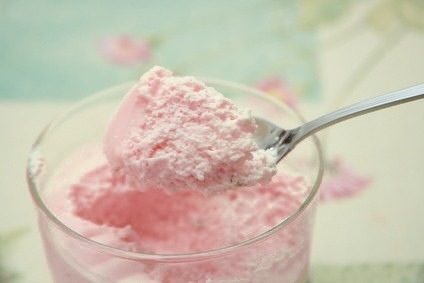
20130807-130803.jpg

Pink Grapefruit & Limoncello Mousse

6 Aug

Last time my mom visited from Belgium, I randomly asked her if she still remembered those little cups of yogurt mousse she used to buy for us by the dozen. We were on our way to ‘Surfas’ kitchen supply store in Culver City, in search of organic black squid ink – don’t ask! There was nothing in particular that sparked my question, so it is entirely possible that I overwhelmed her with the randomness of it, but mom firmly stated that she had no idea what I was talking about and quickly concluded that I must be remember things wrong, because mom is always right… even when she’s wrong. It’s a Flemish miracle, really, and one that should be recognized by a ribbon from the Pope and possible sainthood.

I know that I didn’t dream up this deliciousness, because I still remember exactly what the packaging looked like and I remember that this fluffy delight came in lemon, strawberry and blueberry flavor. The tart, sweet lemon flavor was by far my favorite, and I recall I would secretly re-shuffle the containers in the fridge so that the lemon ones were always hidden from plain sight in the back of the fridge, thusly, increasing the odds of saving them for yours truly by 200%. I was stealth like that.

Besides custards, mousses are my next favorite dessert things. I love their airy, light fluffiness. It was only recently that the idea of a pink grapefruit mousse slapped me in the face, when I read an article about how incorporating this fruit into your daily diet promotes weight loss… and what better way to do it than with dessert? Right?

Yeah.

I’m sure this is not what the author had in mind, but whatever. Don’t rain on my culinary parade, please.

20130806-110645.jpg

PINK GRAPEFRUIT & LIMONCELLO MOUSSE
(Adapted from a variety of mousse recipes)
– 2 ruby red or pink grapefruit
– 6 oz of thick Greek yogurt
– 7 oz of heavy whipping cream
– 2 Tbsp of limoncello (or another citrus-flavored liquor)
– 3 egg whites
– a pinch of salt
– 4 sheets of gelatin
– 2 Tbsp of sugar

Place gelatin sheets into a bowl of cold water and allow it to swell. When gelatin is soft, pour cold water out of the bowl and add 2-3 Tbsp of very hot/boiling water and allow swollen gelatin to melt. Let cool slightly while you prepare the other ingredients.

Juice both grapefruits and strain juice so all fleshy bits and pits stay behind. Combine clear grapefruit juice with limoncello. Fold sugar into yogurt, and add juice. Beat yogurt mixture with handheld mixer until well-combined and somewhat fluffy. Taste for sweetness, if it’s too tart, add a bit more sugar.

Beat heavy whipping cream until it is firm & fluffy, but not super stiff. Fold it gently into the yogurt mixture, together with the lukewarm melted gelatin.

Beat egg whites with a pinch of salt until stiff peaks form, and gently fold these into the yogurt/cream mixture. Try to keep the air in the egg whites, as this will give your mousse a light, fluffy texture.

Divide mousse over 6 ramekins or small glasses, and allow to set in the refrigerator for at least 2-4 hours.

Belgian Rice Pudding with Saffron

5 Aug

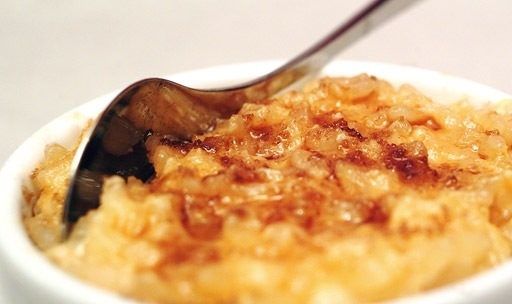
‘Rijstpap’ or rice pudding is a much celebrated treat in Belgium, and it’s no coincidence why this rice dessert became a traditional regional dish in the Province of Brabant, encompassing the central heart of Belgium.

Every year in Flanders, from small rural towns to larger cities, this creamy dessert makes a star appearance during the annual ‘Brueghel Feesten’. These medieval-type festivities compare to the American renaissance fairs, but traditionally focus around food & drink whilst celebrating Flemish cultural heritage and the world-renowned artwork by ‘Master Painter’ Pieter Brueghel. During the 16th Century, Breughel’s work was highly sought after by the wealthy elite of the richer cities, and the humble ‘peasant’ painter was warmly embraced & respected in the high society circles of thriving medieval Brussels. His works mostly featured magnificent landscapes and bustling farm village life, often painted with a comical yet honest approach and illustrating the abundant food & drink at the festive farmers’ table in great detail. Since then, the often 2-day long ‘Breughel Feesten’, for which people dress up in traditional 16th Century peasant grab, are synonymous to copious amounts of free-flowing ‘tap’ beer, fantastic food and… plate after plate of creamy golden ‘rijstpap’.

Rijstpap made an appearance early on in Flemish history, and quickly became associated with rural life and heavenly simplicity. After all, as per an old Flemish folkloric saying, heaven welcomes you with bottomless bowls of rijstpap and golden spoons. I can’t testify to the veracity of this tale, but I’m on board!

This sweet, milk-based porridge bears somewhat of a resemblance to American rice pudding, but not entirely. For starters, a traditional Belgian rice pudding is spiced with saffron & cinnamon, and not just vanilla. Secondly, the texture is more porridge-like (‘rijst’ meaning rice, and ‘pap’ meaning porridge) and not quite as sweet or sugary as a pudding. And lastly, the dessert is classically eaten with a hefty dusting of dark brown sugar, that slowly melts into a molasses-type syrup when it blends with the milky rice. It’s ridiculously good and it brings back many happy childhood memories of the ‘Brueghel Feesten’ for me…

20130805-144353.jpg

Belgian Rice Pudding
(As per a childhood recipe)
– 1 liter of whole milk (or approx. 32 fl oz)
– 4 oz of long grain, white rice (dry)
– 1 vanilla bean
– 1 stick of cinnamon
– 1-2 hefty pinch(es) of saffron (if you like the flavor & color of saffron, use 2. If not, use 1)
– 5 Tbsp of sugar

Add the milk, rice, and sugar in a heavy pot and bring to a simmer over medium heat, stirring occasionally with a wooden spoon to separate the grains. Add the cinnamon stick, vanilla bean and saffron threads, cover and simmer over very low heat for 30 minutes or more, until the rice is tender and has absorbed the milk. Do not stir the rice during this part of cooking.

Stir with a wooden spoon when rice is tender, to spread the saffron color evenly.

Discard the cinnamon and vanilla, scoop the rice pudding into small bowls and allow to cool completely. Sprinkle with dark brown sugar before serving.

Rose Water & Lemon Turkish Delight

4 Aug

Yesterday evening, I drifted into a beautiful Pinterest dream and stumbled upon picture after picture of gorgeous Polish and Turkish pottery.

There are times where I reminisce about my life in Belgium with somewhat of a pang of homesickness in the pit of my stomach, and seeing that beautiful pottery made me miss the Turkish markets in my town there. Compared to so much cultural history and ‘couleur locale’ (local ‘color’), California seems sterile at times, despite the Hispanic and Asian influence we’re inundated with over here. It’s not the same. I miss the public open-air markets in Belgium. They usually run once a week and are set up like our farmers markets over here, just with a lot more variety in goods and tremendously more local color. They bring together a variety of people, from the old bitties to the young hipsters, all in search of hot waffles and exciting market finds. The many vendors or ‘markt kramers’ are celebrities on their own turf, luring customers by loudly broadcasting their wares in a thundering voice and colorful language, or blatantly flattering the female population in hopes of piquing their interest. Market days were fun, even when temperatures dropped to single digits and rain puddles formed alongside the cobblestone streets.

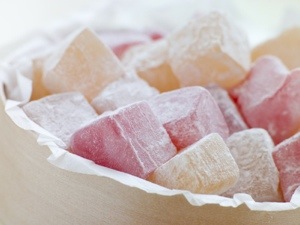
One of the things I would regularly indulge in whilst browsing around on market days, was delicious ‘lokum’ or Turkish Delight. Sweet, gooey & soft, it was the perfect kind of treat to reward yourself with after a busy morning at the market, or to make you forget you’re entering your fifth week of nonstop pounding rain & howling wind. Paired with a hot cup of mint tea, it brings a bit of Oriental flair into your home and you can pretend you went shopping at the ‘casbah’ or Turkish bazaar.

Turkish delight is easy to make. It’s traditionally flavored with rose water, like marzipan, but you can add whichever flavoring you prefer. I prefer the authentic rose water flavor, but I add in some fresh lemon juice as well. You could even add in some pistachio nuts, fresh mint leaves or a pinch of saffron. The possibilities for these gelees are endless.

20130804-091653.jpg

ROSE WATER & LEMON TURKISH DELIGHT
(Makes approx. 60 pieces)
– 1 2/3 cups of cold water
– 7 tsp of unflavored gelatin (approx. 4 packages)
– 2 1/3 cups of sugar
– 3 Tbsp of freshly squeezed lemon juice, strained
– 4 tsp of rose water
– 2 drops of red food coloring
– corn starch
– vegetable oil

Brush a 8x8x2-inch non-stick metal pan with the oil. Place 2/3 cup of water in a small bowl, and sprinkle gelatin in it. Set aside until gelatin softens, approx. 15 minutes.

Combine remaining 1 cup of water, sugar and lemon juice in a heavy medium saucepan. Stir over medium heat until sugar dissolves and syrup boils. Cover, increase the heat and boil 3 more minutes.

Uncover, attach a candy thermometer, and boil until temperature reaches 238F, which should be about 5 min.

Remove pan from the heat and add in gelatin mixture, store until completely dissolved. Mix in the rose water and food coloring (*), and pour into oil-brushed prepared pan. Let stand at room temperature until set, about 4 hours. Cover and chill overnight.

Cut candy into small squares and completely coat with corn starch. You can keep these in the fridge in an airtight container for approx. 1-2 weeks.

(*) Food coloring is strictly for color only and you can leave this out or add as much as little if you desire. You can also play around with different colors.

Mama’s Tiramisu

3 Aug

In my post about lasagna, I’ve hinted before that mom was mystifyingly Italian, for a Belgian. While she not only was is a passionate believer in enhancing verbal communication with dramatic facial expressions and/or hand gestures, she also prepared certain Italian staples like a real ‘Mama Gina’, with ‘passione’ and the prerequisite matriarchal dominance of the kitchen quarters.

As a child, I recall there were many times I’d be perched on the kitchen counters, intrigued by the tantalizing smells and mom’s busy activity, but there were an equal number of times where our mere presence in the kitchen would catapult her into a peppered tizzy and we instinctively knew to keep our distance. On ‘tiramisu-days’, we’d be lucky if we were even allowed to stand in the doorframe and watch… And even then, the sight of us would often result in an annoyed hand gesture and a quick dismissal, as though tiramisu was top secret and you needed special Governmental clearance before you could watch.

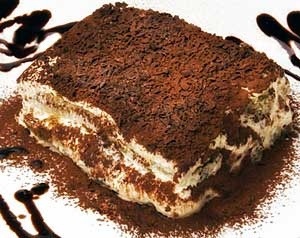
I’m not even sure where mom got the recipe below from, but if you’ve ever had the opportunity to savor the ‘real thing’ from a sun-drenched patio in Napoli, you’d instantly recognize that mom was on to something with this recipe. It’s so creamy and velvety, that the first bite of this deliciousness sends you straight to a cobblestone piazza somewhere in Rome. Furthermore, tiramisu is so easy to make, it should be a mortal sin, really.

While it takes some advance planning since tiramisu needs 8-10 hours in the refrigerator, it’s a ‘no bake’, foolproof dessert that is a real show-stopper. Heck, even your teenage daughter may briefly forget about your ‘lameness’ and kiss you on the cheek for this one. And wouldn’t that be worth it???

20130803-083535.jpg

MAMA’S TIRAMISU
(As per my mom’s top secret instructions… Sshhh!!!)
– 10.5 oz of ladyfinger cookies (*)
– 9 oz of mascarpone
– 3 eggs, yolks & whites separated
– 3.5 oz Amaretto liquor
– 7 oz of very strong cold coffee (coffee that is so strong, you can’t drink it!)
– 2 Tbsp of golden brown sugar
– 1/3 cup of sweetened cocoa powder (Nesquick works great!)
(*) The trick to a great tiramisu is using ‘real’ ladyfinger cookies like they sell in most of Europe. They are crunchy and light, and dusted with a bit of crystal sugar on the outside. The American ladyfinger cookies are too ‘cakey’ and not crunchy at all. If you can’t find Italian ladyfinger cookies or ‘savoiarde’, use Nilla wafers instead.If you don’t know what ladyfinger cookies look like, you can see some of them in the picture of my chocolate mousse post.

Beat egg yolks, mascarpone and sugar into a smooth consistency with your electric, handheld mixer.
In a clean, oil free bowl, beat egg whites into stiff peaks and gently fold into the egg/mascarpone mixture by hand.

Combine coffee and Amaretto liquor.

Take a 9×13 oven dish (or similar in size). No need to butter or flour, because this is a no-bake dessert!

Dip ladyfinger cookies quickly in coffee mixture one-by-one, and place in a single layer on the bottom of the pan. Don’t make the mistake I made once and drop your entire package of cookies all at once in the coffee, as you will not have enough time to take them out and they’ll disintegrate into a sloppy coffee mess before your thy very eyes. You need to really do this one by one, and dunk ’em, don’t let them ‘sit’ for too long in the liquid, as they will start to fall apart.

When you’ve completed a layer of coffee-dunked cookies, spread a 1/4 thick layer of the mascarpone mixture over the top with a spatula. Place another layer of coffee-dipped cookies on the top, and repeat this process until you reach the top of your pan. Finish with a layer of the mascarpone mixture.

Dust the top layer of the mascarpone mixture liberally with the powdered cocoa, cover and refrigerate overnight or for at least 8-10 hours. This will allow the cookies to soften and absorb the creaminess of the mascarpone. In the morning, the cocoa on the top will have melted into a shimmering layer of chocolatey goodness. If you like, you can sprinkle some shaved milk chocolate over the top right before serving.

Now go and make this. Do it now. Really, your family will love you.

Jozefa’s Chocolate Mousse

2 Aug

Hershey’s chocolate syrup. Blech!

Not to trample on an American staple, but telling me that this overly sweet and unnaturally flavored syrup tastes like ‘chocolate’, is like telling me that fried pork rinds are wholesome. I fully comprehend the nostalgia behind Hershey’s syrup and, just like Velveeta, I believe there’s a place for it in our culinary repertoire, but let chocolate mousse not be part if it. OK?

Alright. I’ll come right out saying that I’m a bona fide chocolate snob. I’m Belgian, you can’t hold it against me, really. I’ll take Swiss chocolate as a close second, and San Francisco’s Ghirardelli as a third, if all else fails and I’m at imminent risk of turning into a brooding murderous harpy during that time of the month. If it’s any consolation, British Cadbury ranks right down there with Hershey’s as well in my book. Don’t get me wrong: I love America. I will defend America vehemently in cultural debates with my European friends. I love baseball, Texas BBQ and bull riding. Just not American chocolate.
I think one of the worst chocolate experiences I’ve had in this country was a chocolate mousse I ate at a little bistro in Morristown, NJ several years ago. It wasn’t per se horrible but it definitely wasn’t ‘chocolate’ what my taste buds were concerned. And it certainly wasn’t anything like the chocolate mousse my grandma used to make, but then again, Jozefa set the bar way high.

With my hips arbitrarily expanding from a size 12 to a size 16 at the mere sight of dessert in the blink of an eye, I try to watch what I eat but let me be clear: there’s a time and a place for everything, and dessert is no place to skimp on butter, cream and/or sugar. As a matter of fact, I’d rather not have dessert at all if I can’t have the full fat stuff. My grandma understood this too and her chocolate mousse would have earned her a ribbon from the Pope. It’s that good! So without further ado, I must bring her genius into this world and spread the love.

20130802-114407.jpg

JOZEFA’S CHOCOLATE MOUSSE
(My grandma’s recipe for a perfectly delicious chocolate mousse!)
– 8 oz of good quality semi-sweet dark chocolate (the higher the cacao %, the better!)
– 1.5 cups of heavy whipping cream
– 6 eggs, yolks & whites separated
– 3.5 oz of sugar

Melt chocolate ‘au bain marie’, aka a double boiler, until completely liquid. In the meantime, beat egg yolks and sugar into a firm, light pale foam. Add liquid chocolate to the yolks, and fold everything together by hand.

In a clean & oil-free bowl, beat the egg whites into stiff peaks. Then gently fold the egg whites into the chocolate mixture by hand, making sure not to break the air bubbles in the egg whites too much. Do this slowly and gently, until everything is well combined.

In a bowl, beat cream until fluffy but still runny. Don’t overbeat, or you’ll end up with stiff whipped cream! You want the cream to be fluffy and somewhat airy, not stiff. Fold cream into chocolate mixture by hand. Divide over 6 bowls and place in refrigerator for at least 6-8 hours to stiffen.

HELGA’S GROWN-UP HAZELNUT AMARETTO MOUSSE
(Adapted from my grandma’s chocolate mousse recipe above)
– 4 oz of good quality dark chocolate
– 4 oz of gianduja chocolate (*)
– 1 cup of heavy cream
– 3 Tbsp of Amaretto liquor
– A splash of pure hazelnut extract (or hazelnut liquor like Frangelico)
– 6 eggs, yolks & whites separated
– 3 oz of sugar
(*) Gianduja is a firm, Italian chocolate bar made from ground hazelnuts and milk chocolate. You can usually find bars of gianduja chocolate at your local Italian delicatessen. If you cannot find gianduja chocolate, replace it with Nutella, but drop cream down to 3/4 cup.

Melt all chocolate ‘au bain marie’, aka in a double boiler, until completely liquid. In the meantime, beat egg yolks, amaretto, hazelnut extract and sugar into a firm, light pale foam. Add liquid chocolate to the yolks, and fold everything together by hand.

In a clean & oil-free bowl, beat the egg whites into stiff peaks. Then gently fold the egg whites into the chocolate mixture by hand, making sure not to break the air bubbles in the egg whites too much. Do this slowly and gently, until everything is well combined.

In a bowl, beat cream until fluffy but still runny. Don’t overbeat, or you’ll end up with stiff whipped cream! You want the cream to be fluffy and somewhat airy, not stiff. Fold cream into chocolate mixture by hand. Divide over 6 bowls and place in refrigerator for at least 6-8 hours to stiffen.

Blue Cheese Potato & Rutabaga Gratin

1 Aug

Belgium is big on potatoes, hence our national love affair with French fries… Potatoes were also my grandpa’s favorite dish, and genetically, I think that’s where I got my potato-love from. He especially liked mashed potatoes, with loads of butter & cream, to the point where they had to be served in a shallow bowl to ensure all that buttery deliciousness didn’t land on the antique parquet floors.

To further add to my love for potatoes, both mom & dad would take me to local farms for basic provisions like milk & eggs, butter, tomatoes… I was very little and I don’t remember many of them, but I do vividly recall one of them. It had a stone arched entrance with large, cast-iron gate doors that creaked when you pushed them open, and the old stone farm house & buildings were wrapped around a cobblestone courtyard, complete with the prerequisite droppings of horse manure and hay shoveled in the corner. The grounds were guarded by a large mutt that once bit my brother in the ass was allowed to roam freely and would come barrelling down towards you, stopping only a few feet shy, and then taunt you with his bark until the farm hands would shoo it away. You never knew which corner ‘the creature’ would come from, and as a little girl, that made me grasp my mother’s pants extra-tightly out of fear for death by wild canine. To further confirm my belief that this was purgatory, the plump farmer’s wife would often beckon us into the farm house in her stained apron and with a semi-toothless smile, and then proceed with pinching my cheeks with her callused, rancit smelling hands. The farm ‘office’ had several yellow sticky fly traps hanging from the ceiling with a handful of flies desperately trying to free themselves from certain death, and I always tried not to look at those things, because it made my little heart weep for the shimmering blue-green souls. The only upside I remember about that particular farm was that we were allowed to play on the potato fields whilst serious business was conducted inside the office. On occasion, we’d be handed a small garden shovel by a farm hand and asked if we’d like to go digging for spuds. I loved digging for potatoes! To me, it was like hunting for buried treasure: you never knew whether you’d come up with tiny little ones or the BIG monster kind that earned you serious bragging rights. Our loot would be taken home and prepared, and somehow it always tasted waaayyy better then when we’d buy potatoes from the store. I think I learned early on that farm fresh food tastes better then the stuff you buy in the grocery store.

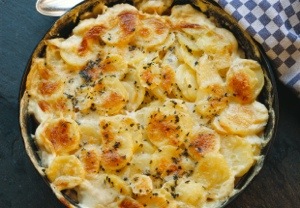
Just like my opa, potatoes have a special place in my heart and on my hips. Belgian cuisine is the more down-to-earth sibling of French cuisine, and as such it is heavily French influenced. However, being more of a hearty meat & potatoes kind of country, we worship the lowly tuberous crop alongside many other root vegetables like turnips, carrots, parsnips, rutabaga etc. Potato gratin is one of those dishes that seem to always make it to family get-togethers during holidays or festivities, and often in duplicate too. I’m not sure where precisely I got the recipe below from, but I think I based it loosely on ‘Gratin Dauphinois’ and then sort of made it my own over the years.

20130801-154359.jpg

BLUE CHEESE POTATO & RUTABAGA GRATIN
– 1.5 lbs of firm-cooking potatoes (Yukon Gold, for instance), more or less even in diameter
– 4-5 medium rutabaga
– 3-4 cloves of garlic, minced or grated
– 1 cup of heavy cream
– 1/2 cup of half & half
– ½ cup of chopped fresh thyme
– 6-8 oz of Gruyere cheese, shredded
– 4 oz of blue cheese crumbles (Danish Blue or Roquefort work great)

Heat oven to 375F. Peel and wash potatoes. Peel rutabagas. With your mandolin slicer, slice potatoes and rutabagas into thin, even slices (approx. 1/8 inch thick).

Butter an oven pan on all our sides. In the bottom of the pan, make a ¼ inch layer of the potato slices and rutabaga slices combined (you can mix & match them, so your ¼ inch thick layer has a bit of both), overlapping them a bit. Sprinkle with some of the blue cheese and a bit of the fresh thyme, then lightly toss some gruyere over top. Repeat this process until you reach the top of your pan. Reserve about 3-4 oz of the gruyere and set aside.

In a small bowl, combine milk & cream, add /minced grated garlic and salt & pepper to taste. Add remaining thyme, if you have any, and give everything a good stir. Pour all of it over the potato/rutabaga mixture in your pan. The cream mixture will thicken as the potatoes release their starch, so don’t worry if it looks a bit too soupy at first. Cover pan and cook in a 375F oven for approx. 30-45 min, until potatoes & rutabaga are tender and easily pricked with a fork. Uncover, sprinkle remaining Gruyere over the top and brown until the broiler until cheese is nicely melted, a bit browned on the edges & bubbly.

Blue Cheese Potato & Rutabaga Gratin

1 Aug

Belgium is big on potatoes, hence our national love affair with French fries… Potatoes were also my grandpa’s favorite dish, and genetically, I think that’s where I got my potato-love from. He especially liked mashed potatoes, with loads of butter & cream, to the point where they had to be served in a shallow bowl to ensure all that buttery deliciousness didn’t land on the antique parquet floors.

To further add to my love for potatoes, both mom & dad would take me to local farms for basic provisions like milk & eggs, butter, tomatoes… I was very little and I don’t remember many of them, but I do vividly recall one of them. It had a stone arched entrance with large, cast-iron gate doors that creaked when you pushed them open, and the old stone farm house & buildings were wrapped around a cobblestone courtyard, complete with the prerequisite droppings of horse manure and hay shoveled in the corner. The grounds were guarded by a large mutt that once bit my brother in the ass was allowed to roam freely and would come barrelling down towards you, stopping only a few feet shy, and then taunt you with his bark until the farm hands would shoo it away. You never knew which corner ‘the creature’ would come from, and as a little girl, that made me grasp my mother’s pants extra-tightly out of fear for death by wild canine. To further confirm my belief that this was purgatory, the plump farmer’s wife would often beckon us into the farm house in her stained apron and with a semi-toothless smile, and then proceed with pinching my cheeks with her callused, rancit smelling hands. The farm ‘office’ had several yellow sticky fly traps hanging from the ceiling with a handful of flies desperately trying to free themselves from certain death, and I always tried not to look at those things, because it made my little heart weep for the shimmering blue-green souls. The only upside I remember about that particular farm was that we were allowed to play on the potato fields whilst serious business was conducted inside the office. On occasion, we’d be handed a small garden shovel by a farm hand and asked if we’d like to go digging for spuds. I loved digging for potatoes! To me, it was like hunting for buried treasure: you never knew whether you’d come up with tiny little ones or the BIG monster kind that earned you serious bragging rights. Our loot would be taken home and prepared, and somehow it always tasted waaayyy better then when we’d buy potatoes from the store. I think I learned early on that farm fresh food tastes better then the stuff you buy in the grocery store.

Just like my opa, potatoes have a special place in my heart and on my hips. Belgian cuisine is the more down-to-earth sibling of French cuisine, and as such it is heavily French influenced. However, being more of a hearty meat & potatoes kind of country, we worship the lowly tuberous crop alongside many other root vegetables like turnips, carrots, parsnips, rutabaga etc. Potato gratin is one of those dishes that seem to always make it to family get-togethers during holidays or festivities, and often in duplicate too. I’m not sure where precisely I got the recipe below from, but I think I based it loosely on ‘Gratin Dauphinois’ and then sort of made it my own over the years.

20130801-154359.jpg

BLUE CHEESE POTATO & RUTABAGA GRATIN
– 1.5 lbs of firm-cooking potatoes (Yukon Gold, for instance), more or less even in diameter
– 4-5 medium rutabaga
– 3-4 cloves of garlic, minced or grated
– 1 cup of heavy cream
– 1/2 cup of half & half
– ½ cup of chopped fresh thyme
– 6-8 oz of Gruyere cheese, shredded
– 4 oz of blue cheese crumbles (Danish Blue or Roquefort work great)

Heat oven to 375F. Peel and wash potatoes. Peel rutabagas. With your mandolin slicer, slice potatoes and rutabagas into thin, even slices (approx. 1/8 inch thick).

Butter an oven pan on all our sides. In the bottom of the pan, make a ¼ inch layer of the potato slices and rutabaga slices combined (you can mix & match them, so your ¼ inch thick layer has a bit of both), overlapping them a bit. Sprinkle with some of the blue cheese and a bit of the fresh thyme, then lightly toss some gruyere over top. Repeat this process until you reach the top of your pan. Reserve about 3-4 oz of the gruyere and set aside.

In a small bowl, combine milk & cream, add /minced grated garlic and salt & pepper to taste. Add remaining thyme, if you have any, and give everything a good stir. Pour all of it over the potato/rutabaga mixture in your pan. The cream mixture will thicken as the potatoes release their starch, so don’t worry if it looks a bit too soupy at first. Cover pan and cook in a 375F oven for approx. 30-45 min, until potatoes & rutabaga are tender and easily pricked with a fork. Uncover, sprinkle remaining Gruyere over the top and brown until the broiler until cheese is nicely melted, a bit browned on the edges & bubbly.

Princess Slaw

31 Jul

I would be lacking proper patriotic pride if I didn’t feature something ‘witlof’ on here. After all, this bitter leafy vegetable ‘is’ Belgium’s pride, so much so, that it is commonly referred to as Belgian Endive in English. Like Vegas brides, witlof was discovered entirely by chance. The story goes that it was someone at the Botanical Gardens in Brussels who happened to store chicory roots in a dark cellar, and then later discovered that they had produced fragrant white leaves. Like so:

20130731-185721.jpg

In 1872 some of this ‘witlof’ was sent to Paris, where it was later show-cased in an exhibition… and everybody lived happily ever after! Well, maybe not everybody.

As a child, I was never a big fan of raw witlof. Braised, these little cabbages caramelize and turn somewhat sweet, but left raw, the white leaves have a rather bitter crunchy bite. At the time, my juvenile palette wasn’t ready to embrace this without a fight, especially not considering there were sweeter salad options available. Nonetheless, mom loved endive salads and so we ate them. As odd as it may sound to America’s culture of coddling its brood, Belgian children typically grow up eating whatever the adults eat around the table, give or take the prerequisite portion control or cutesy approach to prevent excessive sulking. Being a foodie herself, mom was particularly insistent on expanding our palettes and exposing us to different flavors and foods from around the globe. Her tenacity in this fiercely rivaled my stubbornness, to the point where she once cooked spinach 4 days in a row and fed it to me with each meal, simply because I refused to eat the required 3 spoonfuls for good measure. Four whole days!!! If I even remotely hinted that I was hungry, I’d be at the table with my darned reheated bowl of spinach. I endured four days of ‘spinach prison’, before my young brain grasped the concept that I wasn’t going to win this one… um, yeah. Not that I’m stubborn or anything.

But, we digress… Yesterday, my Flemisch childhood friend Hadewych private-messaged me over Facebook to sing praise about my blog (she’s very pretty AND intelligent!), and asked if I was going to feature witlof and root vegetables, as these are true Belgian staples. She shared a recipe for a delicious, crisp witlof salad with red beets and happened to mention, tongue-in-cheek, that she calls it ‘Princess Slaw’ since the beets give the salad a pink hue and her young daughter Sam is easily bribed with anything pink and/or “princess” these days… Hadewych: 1 – Sam: 0.

With Belgian Endive costing you your first born an arm & a leg over here, and our finances seriously challenged, I got creative and played around a bit with Hadewych’s salad recipe. However, originally this slaw is made with thinly sliced witlof, rather than fennel. My more budget-friendly version below is still pink, so I’m sticking with ‘Princess Slaw’. In honor of a little blue-eyed girl named Sam.

20130731-181609.jpg

PRINCESS SLAW
(Adapted from super-mom Hadewych’s recipe)
– 1 large red beet, roasted (*)
– 1 tart apple, like Granny Smith
– 1 small/medium fennel bulb
– 2 Tbsp of good plain mayonnaise
– 3 Tbsp of Greek yogurt (or crème fraiche)
– juice & zest of 1 lemon
– 1 tsp of good mustard
– 1-2 Tbsp of chopped fresh parsley
– salt & pepper, to taste
(*) When working with beets, it is good to know that they will stain not only your hands, but also any porous material you place them on. If you don’t like your equipment or hands turning a bright pink, use a plate to cut them. The color will wash off of your hands after a few washes, but you could also wear latex gloves.

Heat oven to 400F. Cut stems off of the beets (no need to peel the beets!), and wash them so you get rid off all the dirt. Wrap each beet individually in aluminum foil. Place in the hot oven and roast until beet is fork-tender. For a tennis ball-size beet, this will be approx. 45 min.
Take beet out of the oven, and let cool until able to handle. Unwrap and rub beet under cool running water. The skin will slip right off without much effort! Chop into small cubes.

While the beet roasts, zest lemon and squeeze juice into a small bowl. Add mayo, yogurt, mustard and salt & pepper, to taste. Stir until you get a smooth dressing. Set aside and let flavors develop a bit.

Cute stems and ends of the fennel. Remove outer layer, and cube fennel heart in very small dice or slice thinly. Peel & chop apple into small dice as well.
Add chopped beet to bowl with fennel & apple. Pour dressing over the top and stir to coat everything. The slaw will turn bright pink. Sprinkle some roughly chopped fresh parsley over the top.

If you are a fan of raw beets, which I am not so much, you can also roughly grate a raw beet and the apple with your box grater, and combine it with with the thinly sliced witlof or fennel. Enjoy!

Baba Ganoush with Goat Cheese & Olives

29 Jul

In my post about Moroccan Spiced Meatloaf, I mentioned that I was at one time blessed to have lived in the buzzing, ethnic heart of Ghent, Belgium’s third largest city and melting pot of all kinds of Eastern cuisines.

I first discovered ‘Baba Ganoush’ in a small, dimly lit Turkish restaurant, complete with ornate belly-dancers and Kelim-covered poofs that served as seats around the knee-high, mahogany table tops. We had made our reservations a few weeks ahead of time, but when we arrived, somehow our reservation got botched and we had to wait well over an hour for our table. It turns out that this was actually a blessing in disguise, as the incredibly hospitable owner catered to us with gratuitous grilled pita bread and baba ganoush. Farouk, the bartender who made sure we weren’t thinking about the time that passed, kept the wine & conversation flowing with flair, and in the end, we sort of regretted being escorted to our table. To me, baba ganoush represents the warmth & earthy deliciousness of the flavorful ethnic dishes you find in the many small, family-run eateries in Belgium’s urban areas. Just like Mexican cuisine has become a staple in every day living in California, shoarma, doner kebab & things like baba ganoush are part of every day life in Belgium.

If you’ve never heard of baba ganoush, I urge you to keep an open mind as all it really is, is nothing more than a silky smooth & velvety roasted eggplant dip. It’s truly a bit of heaven in a small bowl. It’s perfect on bread or with pita chips, but also as a dip for roasted vegetables or a spread for sandwiches. It’s very versatile, and you’ll understand why the minute your lips meet this Middle-Eastern treasure.

20130730-125605.jpg

BABA GANOUSH WITH KALAMATA OLIVES & GOAT CHEESE
(Adapted from a recipe by ‘The Magic Carpet’)
– 2 large eggplant(s), whole
– 3-4 cloves of garlic, grated (use more for garlicky, and less for mild)
– 1 scallion, finely chopped
– 1/4 cup of tahini (*)
– 3 Tbsp of mild soft goat cheese (or thick Greek yogurt)
– juice of 1 small fresh lemon
– 1/3 cup of finely chopped fresh flat-leaf parsley
– 1 tsp of ground cumin
– 1 tsp of smoked paprika
– 1/3 cup of finely chopped kalamata olives
– salt & pepper to taste
(*) Tahini is a paste that is similar in texture than peanut butter, but made from sesame seed, instead. It can usually be found at local specialty grocery stores.

Heat oven to 375F (200C). Wash eggplant and prick them all over with a fork. Roast in the oven, whole, for approx. 45-60 minutes until the skin is blackened and the flesh is soft.

Let cool and peel eggplant. When they are soft and perfectly roasted, this should be very easy.
Slice off the top of each eggplant and place peeled flesh in a large bowl, together with the garlic and spring onion. Purée with a hand mixer until you get a smooth consistency, or mash it all by hand with a fork.

Add the tahini, lemon juice, goat cheese, spices and chopped parsley, and stir together until well combined. Season with salt & pepper to taste. Add a pinch of cayenne pepper for a bit of heat.

Heap chopped olives on top. Drizzle with olive oil, sprinkle some toasted pine nuts over the top, and serve with wedges of pita bread or grilled toast.