Tag Archives: budget friendly

Flemish Beignets

7 Aug

‘Oliebollen’ or ‘smoutebollen’, Belgium’s answer to American donuts, are firmly planted in youth sentiment for me. They bring back lots of teenage memories, of spending hour upon hour parading up & down the snowy fairgrounds with my friends, often in sub-zero temperatures, in hopes the cute fair hands would notice us and score us a free paper cone of hot beignets or a free ride.

When the weather gets dreary or downright mean, there’s nothing more comforting than to bite into a crispy hot ball of freshly fried dough, dusted with powdered sugar. The sugar instantly melts on the hot surface and forms a crackling coating on the outside of this deep fried dream. I’m telling you now, oliebollen are a ‘must have’ when the temps drop and your nose hairs are starting to congeal.

You can buy yourself some sugary warmth at the many quaint stalls that line the town squares in Holland & Belgium, and waft invitingly through the cold Fall & Winter air. Especially during the times the ‘kermis’ or fair is in town, or the annual Christmas Markets that start showing up in late November, both of which add much needed light & coziness to the short, dark evenings. I mean, just look at it:

20130807-213146.jpg
Doesn’t it look all warm and beckoning?

I figured that if I wanted ‘oliebollen’, I would have to learn to make them at home since Los Angeles is short on this kind of campy quaintness… and who can wait for the county fair to arrive… in July! No. I needed to have access to this greasy happiness in Fall & Winter, when evening temperatures drop well below 65F. Don’t judge.

I’ve probably spent too much time browsing the Internet for the perfect recipe, but the winning recipe came from a former colleague of mine, who was tasked by yours truly with the impossible mission of seducing prying the recipe out of our favorite ‘oliebollen‘ baker from the city fair in Ghent. I completely forgot about these, until I recently found her grease-stained email folded neatly in a cookbook of mine… Enjoy!

20130807-215157.jpg

OLIEBOLLEN
(aka Flemish beignets… per Marktkramer De Kuijper‘s recipe)
– 1.5 oz of good quality unsalted butter
– 10.5 oz of self-rising flour (or pastry flour or all purpose flour, if you can’t find self-rising flour)
– 1 oz of fresh yeast (or 0.5 oz of dry active yeast)
– 8 oz of whole milk
– 1 tsp of natural vanilla extract
– a pinch of salt
– 1.5 eggs (2 whites + 1 yolk)

Make sure to use room-temperature ingredients, and measure everything precisely!

In a large bowl, sift flour. In a small bowl, crumble fresh yeast into milk, and stir until dissolved. Add yeasted milk & vanilla extract to flour, and stir to create a batter.

Melt butter in the microwave on medium power, and add egg yolk and butter to batter. Stir until well combined.

Beat egg whites in a grease-free bowl until stiff peaks form. Gently fold into the batter, and also add a pinch of salt.
The batter should be fairly loose, so if it feels a bit too stiff, add a splash more milk.

Let the batter rest for 20-25 minutes while you fill a large Dutch oven with peanut oil and heat it to 375F. Use a candy thermometer to make sure the oil doesn’t overheat, which causes uneven cooking.

Use an ice cream scoop to drop 2-3 scoops of batter into the hot oil at a time. Cook each side until golden brown. Doughnuts will cook very quickly in the right temperature oil, so check them quickly after you place them in the oil. Flip and cook the other side. Don’t crowd your pot, as this will cause the temperature to drop too rapidly, causing uneven cooking and can potentially cause your pot to overflow, which is dangerous!

Use a spatula to take the beignets out of the oil and let them sit on a paper towel lined plate for a minute or so, to absorb the excess oil. Transfer to a plate in a warm oven while you cook the rest of them.

When done, dust with powdered sugar and prepare to eat more than one!
Belgian Rice Pudding with Saffron

5 Aug

‘Rijstpap’ or rice pudding is a much celebrated treat in Belgium, and it’s no coincidence why this rice dessert became a traditional regional dish in the Province of Brabant, encompassing the central heart of Belgium.

Every year in Flanders, from small rural towns to larger cities, this creamy dessert makes a star appearance during the annual ‘Brueghel Feesten’. These medieval-type festivities compare to the American renaissance fairs, but traditionally focus around food & drink whilst celebrating Flemish cultural heritage and the world-renowned artwork by ‘Master Painter’ Pieter Brueghel. During the 16th Century, Breughel’s work was highly sought after by the wealthy elite of the richer cities, and the humble ‘peasant’ painter was warmly embraced & respected in the high society circles of thriving medieval Brussels. His works mostly featured magnificent landscapes and bustling farm village life, often painted with a comical yet honest approach and illustrating the abundant food & drink at the festive farmers’ table in great detail. Since then, the often 2-day long ‘Breughel Feesten’, for which people dress up in traditional 16th Century peasant grab, are synonymous to copious amounts of free-flowing ‘tap’ beer, fantastic food and… plate after plate of creamy golden ‘rijstpap’.

Rijstpap made an appearance early on in Flemish history, and quickly became associated with rural life and heavenly simplicity. After all, as per an old Flemish folkloric saying, heaven welcomes you with bottomless bowls of rijstpap and golden spoons. I can’t testify to the veracity of this tale, but I’m on board!

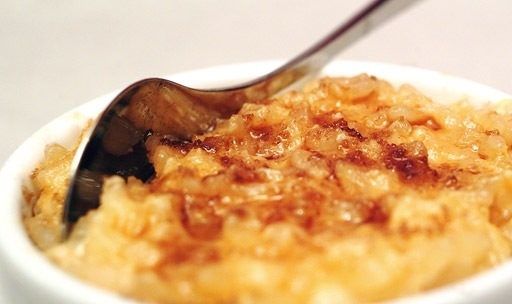
This sweet, milk-based porridge bears somewhat of a resemblance to American rice pudding, but not entirely. For starters, a traditional Belgian rice pudding is spiced with saffron & cinnamon, and not just vanilla. Secondly, the texture is more porridge-like (‘rijst’ meaning rice, and ‘pap’ meaning porridge) and not quite as sweet or sugary as a pudding. And lastly, the dessert is classically eaten with a hefty dusting of dark brown sugar, that slowly melts into a molasses-type syrup when it blends with the milky rice. It’s ridiculously good and it brings back many happy childhood memories of the ‘Brueghel Feesten’ for me…

20130805-144353.jpg

Belgian Rice Pudding
(As per a childhood recipe)
– 1 liter of whole milk (or approx. 32 fl oz)
– 4 oz of long grain, white rice (dry)
– 1 vanilla bean
– 1 stick of cinnamon
– 1-2 hefty pinch(es) of saffron (if you like the flavor & color of saffron, use 2. If not, use 1)
– 5 Tbsp of sugar

Add the milk, rice, and sugar in a heavy pot and bring to a simmer over medium heat, stirring occasionally with a wooden spoon to separate the grains. Add the cinnamon stick, vanilla bean and saffron threads, cover and simmer over very low heat for 30 minutes or more, until the rice is tender and has absorbed the milk. Do not stir the rice during this part of cooking.

Stir with a wooden spoon when rice is tender, to spread the saffron color evenly.

Discard the cinnamon and vanilla, scoop the rice pudding into small bowls and allow to cool completely. Sprinkle with dark brown sugar before serving.

Rose Water & Lemon Turkish Delight

4 Aug

Yesterday evening, I drifted into a beautiful Pinterest dream and stumbled upon picture after picture of gorgeous Polish and Turkish pottery.

There are times where I reminisce about my life in Belgium with somewhat of a pang of homesickness in the pit of my stomach, and seeing that beautiful pottery made me miss the Turkish markets in my town there. Compared to so much cultural history and ‘couleur locale’ (local ‘color’), California seems sterile at times, despite the Hispanic and Asian influence we’re inundated with over here. It’s not the same. I miss the public open-air markets in Belgium. They usually run once a week and are set up like our farmers markets over here, just with a lot more variety in goods and tremendously more local color. They bring together a variety of people, from the old bitties to the young hipsters, all in search of hot waffles and exciting market finds. The many vendors or ‘markt kramers’ are celebrities on their own turf, luring customers by loudly broadcasting their wares in a thundering voice and colorful language, or blatantly flattering the female population in hopes of piquing their interest. Market days were fun, even when temperatures dropped to single digits and rain puddles formed alongside the cobblestone streets.

One of the things I would regularly indulge in whilst browsing around on market days, was delicious ‘lokum’ or Turkish Delight. Sweet, gooey & soft, it was the perfect kind of treat to reward yourself with after a busy morning at the market, or to make you forget you’re entering your fifth week of nonstop pounding rain & howling wind. Paired with a hot cup of mint tea, it brings a bit of Oriental flair into your home and you can pretend you went shopping at the ‘casbah’ or Turkish bazaar.

Turkish delight is easy to make. It’s traditionally flavored with rose water, like marzipan, but you can add whichever flavoring you prefer. I prefer the authentic rose water flavor, but I add in some fresh lemon juice as well. You could even add in some pistachio nuts, fresh mint leaves or a pinch of saffron. The possibilities for these gelees are endless.

20130804-091653.jpg

ROSE WATER & LEMON TURKISH DELIGHT
(Makes approx. 60 pieces)
– 1 2/3 cups of cold water
– 7 tsp of unflavored gelatin (approx. 4 packages)
– 2 1/3 cups of sugar
– 3 Tbsp of freshly squeezed lemon juice, strained
– 4 tsp of rose water
– 2 drops of red food coloring
– corn starch
– vegetable oil

Brush a 8x8x2-inch non-stick metal pan with the oil. Place 2/3 cup of water in a small bowl, and sprinkle gelatin in it. Set aside until gelatin softens, approx. 15 minutes.

Combine remaining 1 cup of water, sugar and lemon juice in a heavy medium saucepan. Stir over medium heat until sugar dissolves and syrup boils. Cover, increase the heat and boil 3 more minutes.

Uncover, attach a candy thermometer, and boil until temperature reaches 238F, which should be about 5 min.

Remove pan from the heat and add in gelatin mixture, store until completely dissolved. Mix in the rose water and food coloring (*), and pour into oil-brushed prepared pan. Let stand at room temperature until set, about 4 hours. Cover and chill overnight.

Cut candy into small squares and completely coat with corn starch. You can keep these in the fridge in an airtight container for approx. 1-2 weeks.

(*) Food coloring is strictly for color only and you can leave this out or add as much as little if you desire. You can also play around with different colors.

Jozefa’s Chocolate Mousse

2 Aug

Hershey’s chocolate syrup. Blech!

Not to trample on an American staple, but telling me that this overly sweet and unnaturally flavored syrup tastes like ‘chocolate’, is like telling me that fried pork rinds are wholesome. I fully comprehend the nostalgia behind Hershey’s syrup and, just like Velveeta, I believe there’s a place for it in our culinary repertoire, but let chocolate mousse not be part if it. OK?

Alright. I’ll come right out saying that I’m a bona fide chocolate snob. I’m Belgian, you can’t hold it against me, really. I’ll take Swiss chocolate as a close second, and San Francisco’s Ghirardelli as a third, if all else fails and I’m at imminent risk of turning into a brooding murderous harpy during that time of the month. If it’s any consolation, British Cadbury ranks right down there with Hershey’s as well in my book. Don’t get me wrong: I love America. I will defend America vehemently in cultural debates with my European friends. I love baseball, Texas BBQ and bull riding. Just not American chocolate.
I think one of the worst chocolate experiences I’ve had in this country was a chocolate mousse I ate at a little bistro in Morristown, NJ several years ago. It wasn’t per se horrible but it definitely wasn’t ‘chocolate’ what my taste buds were concerned. And it certainly wasn’t anything like the chocolate mousse my grandma used to make, but then again, Jozefa set the bar way high.

With my hips arbitrarily expanding from a size 12 to a size 16 at the mere sight of dessert in the blink of an eye, I try to watch what I eat but let me be clear: there’s a time and a place for everything, and dessert is no place to skimp on butter, cream and/or sugar. As a matter of fact, I’d rather not have dessert at all if I can’t have the full fat stuff. My grandma understood this too and her chocolate mousse would have earned her a ribbon from the Pope. It’s that good! So without further ado, I must bring her genius into this world and spread the love.

20130802-114407.jpg

JOZEFA’S CHOCOLATE MOUSSE
(My grandma’s recipe for a perfectly delicious chocolate mousse!)
– 8 oz of good quality semi-sweet dark chocolate (the higher the cacao %, the better!)
– 1.5 cups of heavy whipping cream
– 6 eggs, yolks & whites separated
– 3.5 oz of sugar

Melt chocolate ‘au bain marie’, aka a double boiler, until completely liquid. In the meantime, beat egg yolks and sugar into a firm, light pale foam. Add liquid chocolate to the yolks, and fold everything together by hand.

In a clean & oil-free bowl, beat the egg whites into stiff peaks. Then gently fold the egg whites into the chocolate mixture by hand, making sure not to break the air bubbles in the egg whites too much. Do this slowly and gently, until everything is well combined.

In a bowl, beat cream until fluffy but still runny. Don’t overbeat, or you’ll end up with stiff whipped cream! You want the cream to be fluffy and somewhat airy, not stiff. Fold cream into chocolate mixture by hand. Divide over 6 bowls and place in refrigerator for at least 6-8 hours to stiffen.

HELGA’S GROWN-UP HAZELNUT AMARETTO MOUSSE
(Adapted from my grandma’s chocolate mousse recipe above)
– 4 oz of good quality dark chocolate
– 4 oz of gianduja chocolate (*)
– 1 cup of heavy cream
– 3 Tbsp of Amaretto liquor
– A splash of pure hazelnut extract (or hazelnut liquor like Frangelico)
– 6 eggs, yolks & whites separated
– 3 oz of sugar
(*) Gianduja is a firm, Italian chocolate bar made from ground hazelnuts and milk chocolate. You can usually find bars of gianduja chocolate at your local Italian delicatessen. If you cannot find gianduja chocolate, replace it with Nutella, but drop cream down to 3/4 cup.

Melt all chocolate ‘au bain marie’, aka in a double boiler, until completely liquid. In the meantime, beat egg yolks, amaretto, hazelnut extract and sugar into a firm, light pale foam. Add liquid chocolate to the yolks, and fold everything together by hand.

In a clean & oil-free bowl, beat the egg whites into stiff peaks. Then gently fold the egg whites into the chocolate mixture by hand, making sure not to break the air bubbles in the egg whites too much. Do this slowly and gently, until everything is well combined.

In a bowl, beat cream until fluffy but still runny. Don’t overbeat, or you’ll end up with stiff whipped cream! You want the cream to be fluffy and somewhat airy, not stiff. Fold cream into chocolate mixture by hand. Divide over 6 bowls and place in refrigerator for at least 6-8 hours to stiffen.

Blue Cheese Potato & Rutabaga Gratin

1 Aug

Belgium is big on potatoes, hence our national love affair with French fries… Potatoes were also my grandpa’s favorite dish, and genetically, I think that’s where I got my potato-love from. He especially liked mashed potatoes, with loads of butter & cream, to the point where they had to be served in a shallow bowl to ensure all that buttery deliciousness didn’t land on the antique parquet floors.

To further add to my love for potatoes, both mom & dad would take me to local farms for basic provisions like milk & eggs, butter, tomatoes… I was very little and I don’t remember many of them, but I do vividly recall one of them. It had a stone arched entrance with large, cast-iron gate doors that creaked when you pushed them open, and the old stone farm house & buildings were wrapped around a cobblestone courtyard, complete with the prerequisite droppings of horse manure and hay shoveled in the corner. The grounds were guarded by a large mutt that once bit my brother in the ass was allowed to roam freely and would come barrelling down towards you, stopping only a few feet shy, and then taunt you with his bark until the farm hands would shoo it away. You never knew which corner ‘the creature’ would come from, and as a little girl, that made me grasp my mother’s pants extra-tightly out of fear for death by wild canine. To further confirm my belief that this was purgatory, the plump farmer’s wife would often beckon us into the farm house in her stained apron and with a semi-toothless smile, and then proceed with pinching my cheeks with her callused, rancit smelling hands. The farm ‘office’ had several yellow sticky fly traps hanging from the ceiling with a handful of flies desperately trying to free themselves from certain death, and I always tried not to look at those things, because it made my little heart weep for the shimmering blue-green souls. The only upside I remember about that particular farm was that we were allowed to play on the potato fields whilst serious business was conducted inside the office. On occasion, we’d be handed a small garden shovel by a farm hand and asked if we’d like to go digging for spuds. I loved digging for potatoes! To me, it was like hunting for buried treasure: you never knew whether you’d come up with tiny little ones or the BIG monster kind that earned you serious bragging rights. Our loot would be taken home and prepared, and somehow it always tasted waaayyy better then when we’d buy potatoes from the store. I think I learned early on that farm fresh food tastes better then the stuff you buy in the grocery store.

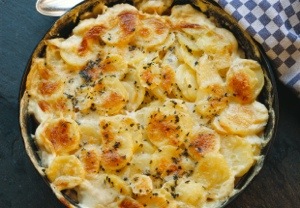
Just like my opa, potatoes have a special place in my heart and on my hips. Belgian cuisine is the more down-to-earth sibling of French cuisine, and as such it is heavily French influenced. However, being more of a hearty meat & potatoes kind of country, we worship the lowly tuberous crop alongside many other root vegetables like turnips, carrots, parsnips, rutabaga etc. Potato gratin is one of those dishes that seem to always make it to family get-togethers during holidays or festivities, and often in duplicate too. I’m not sure where precisely I got the recipe below from, but I think I based it loosely on ‘Gratin Dauphinois’ and then sort of made it my own over the years.

20130801-154359.jpg

BLUE CHEESE POTATO & RUTABAGA GRATIN
– 1.5 lbs of firm-cooking potatoes (Yukon Gold, for instance), more or less even in diameter
– 4-5 medium rutabaga
– 3-4 cloves of garlic, minced or grated
– 1 cup of heavy cream
– 1/2 cup of half & half
– ½ cup of chopped fresh thyme
– 6-8 oz of Gruyere cheese, shredded
– 4 oz of blue cheese crumbles (Danish Blue or Roquefort work great)

Heat oven to 375F. Peel and wash potatoes. Peel rutabagas. With your mandolin slicer, slice potatoes and rutabagas into thin, even slices (approx. 1/8 inch thick).

Butter an oven pan on all our sides. In the bottom of the pan, make a ¼ inch layer of the potato slices and rutabaga slices combined (you can mix & match them, so your ¼ inch thick layer has a bit of both), overlapping them a bit. Sprinkle with some of the blue cheese and a bit of the fresh thyme, then lightly toss some gruyere over top. Repeat this process until you reach the top of your pan. Reserve about 3-4 oz of the gruyere and set aside.

In a small bowl, combine milk & cream, add /minced grated garlic and salt & pepper to taste. Add remaining thyme, if you have any, and give everything a good stir. Pour all of it over the potato/rutabaga mixture in your pan. The cream mixture will thicken as the potatoes release their starch, so don’t worry if it looks a bit too soupy at first. Cover pan and cook in a 375F oven for approx. 30-45 min, until potatoes & rutabaga are tender and easily pricked with a fork. Uncover, sprinkle remaining Gruyere over the top and brown until the broiler until cheese is nicely melted, a bit browned on the edges & bubbly.

Blue Cheese Potato & Rutabaga Gratin

1 Aug

Belgium is big on potatoes, hence our national love affair with French fries… Potatoes were also my grandpa’s favorite dish, and genetically, I think that’s where I got my potato-love from. He especially liked mashed potatoes, with loads of butter & cream, to the point where they had to be served in a shallow bowl to ensure all that buttery deliciousness didn’t land on the antique parquet floors.

To further add to my love for potatoes, both mom & dad would take me to local farms for basic provisions like milk & eggs, butter, tomatoes… I was very little and I don’t remember many of them, but I do vividly recall one of them. It had a stone arched entrance with large, cast-iron gate doors that creaked when you pushed them open, and the old stone farm house & buildings were wrapped around a cobblestone courtyard, complete with the prerequisite droppings of horse manure and hay shoveled in the corner. The grounds were guarded by a large mutt that once bit my brother in the ass was allowed to roam freely and would come barrelling down towards you, stopping only a few feet shy, and then taunt you with his bark until the farm hands would shoo it away. You never knew which corner ‘the creature’ would come from, and as a little girl, that made me grasp my mother’s pants extra-tightly out of fear for death by wild canine. To further confirm my belief that this was purgatory, the plump farmer’s wife would often beckon us into the farm house in her stained apron and with a semi-toothless smile, and then proceed with pinching my cheeks with her callused, rancit smelling hands. The farm ‘office’ had several yellow sticky fly traps hanging from the ceiling with a handful of flies desperately trying to free themselves from certain death, and I always tried not to look at those things, because it made my little heart weep for the shimmering blue-green souls. The only upside I remember about that particular farm was that we were allowed to play on the potato fields whilst serious business was conducted inside the office. On occasion, we’d be handed a small garden shovel by a farm hand and asked if we’d like to go digging for spuds. I loved digging for potatoes! To me, it was like hunting for buried treasure: you never knew whether you’d come up with tiny little ones or the BIG monster kind that earned you serious bragging rights. Our loot would be taken home and prepared, and somehow it always tasted waaayyy better then when we’d buy potatoes from the store. I think I learned early on that farm fresh food tastes better then the stuff you buy in the grocery store.

Just like my opa, potatoes have a special place in my heart and on my hips. Belgian cuisine is the more down-to-earth sibling of French cuisine, and as such it is heavily French influenced. However, being more of a hearty meat & potatoes kind of country, we worship the lowly tuberous crop alongside many other root vegetables like turnips, carrots, parsnips, rutabaga etc. Potato gratin is one of those dishes that seem to always make it to family get-togethers during holidays or festivities, and often in duplicate too. I’m not sure where precisely I got the recipe below from, but I think I based it loosely on ‘Gratin Dauphinois’ and then sort of made it my own over the years.

20130801-154359.jpg

BLUE CHEESE POTATO & RUTABAGA GRATIN
– 1.5 lbs of firm-cooking potatoes (Yukon Gold, for instance), more or less even in diameter
– 4-5 medium rutabaga
– 3-4 cloves of garlic, minced or grated
– 1 cup of heavy cream
– 1/2 cup of half & half
– ½ cup of chopped fresh thyme
– 6-8 oz of Gruyere cheese, shredded
– 4 oz of blue cheese crumbles (Danish Blue or Roquefort work great)

Heat oven to 375F. Peel and wash potatoes. Peel rutabagas. With your mandolin slicer, slice potatoes and rutabagas into thin, even slices (approx. 1/8 inch thick).

Butter an oven pan on all our sides. In the bottom of the pan, make a ¼ inch layer of the potato slices and rutabaga slices combined (you can mix & match them, so your ¼ inch thick layer has a bit of both), overlapping them a bit. Sprinkle with some of the blue cheese and a bit of the fresh thyme, then lightly toss some gruyere over top. Repeat this process until you reach the top of your pan. Reserve about 3-4 oz of the gruyere and set aside.

In a small bowl, combine milk & cream, add /minced grated garlic and salt & pepper to taste. Add remaining thyme, if you have any, and give everything a good stir. Pour all of it over the potato/rutabaga mixture in your pan. The cream mixture will thicken as the potatoes release their starch, so don’t worry if it looks a bit too soupy at first. Cover pan and cook in a 375F oven for approx. 30-45 min, until potatoes & rutabaga are tender and easily pricked with a fork. Uncover, sprinkle remaining Gruyere over the top and brown until the broiler until cheese is nicely melted, a bit browned on the edges & bubbly.

Curried Zucchini Cakes

29 Jul

My good friend Glynis posted a picture of her delicious home-grown zucchini crop on Instagram the other day, and freely confessed she had been on the hunt for zucchini recipes on Pinterest lately. My mind instantly went to a stack of curried zucchini cakes I whipped up months ago. I think last time I thought about frying up zucchini cakes in my skillet was probably when one of my colleagues arrived at my desk with a bag of monster-squash. She had grown them from seedlings and – by the sentiment in her voice – I could tell she felt comforted knowing her squash babies’ were going to someone who would love them as much as she did… I thanked her for sharing her glass house crop, and promised her I’d turn them into something magically delicious for lunch. Like Mary Poppins. Almost.

I’m not sure if these things happen to just me or everybody else, but at times I think my brain just randomly archives itself when it reaches system overload on all the foodie stuff. There are certain dishes I love and vow to put on regular rotation, and then, for some bizarre reason, I completely forget about them for months! Zucchini cakes are one of them. Every time I fry them up I fall in love with their crisp deliciousness and that token dollop of tart crème fraîche that goes on top, but somehow it nearly always takes some sort of a visual stimulus, like Glynis’ Instagram picture, for me to go “oooohhh, zucchini cakes!”.

I figured that I should post these forgotten gems on my blog, and hopefully I won’t forget about them anymore. Right.

20130729-173822.jpg

CURRIED ZUCCHINI CAKES WITH GOAT CHEESE & PINE NUTS
– 4-5 small zucchini, grated (approx. 2 cups)
– 2 small carrots, grated (approx. 1/2 cup)
– 1/2 of a small onion, grated
– 2 Tbsp of finely chopped fresh dill
– 1/2 cup of feta cheese, crumbled
– juice of 1 lemon
– 1 cup of flour
– 3 eggs
– 1.5 Tbsp of sweet curry powder
– salt & pepper, to taste
– olive oil, for pan-frying
– mild goat cheese (*)
– toasted pine nuts
(*) Soledad‘s lemon-lavender goat cheese is delicious with these fritters!

Grate zucchini and place in a cheesecloth-lined strainer. Sprinkle with a pinch of salt and lemon juice, and let drain for 15-20 minutes. Afterwards, take zucchini and squeeze excess out of the vegetables. Place in a large bowl.

Add grated carrot and onion, eggs, flour, feta cheese, dill, and curry powder, and combine into a chunky batter. Add salt/pepper taste.

In a heavy skillet, heat olive oil until nice and hot (but not smoking) over medium heat. Place a hefty scoop of batter in the pan and press down a bit to flatten out. Cook until brown & crisped, +/- 4 minutes. Flip over and brown the other side.

Transfer to a 200F oven to keep warm, while you cook the rest in batches.

In a separate pan, toast pine nuts for a minute or so. Be careful, cause they burn easily!

Serve the zucchini cakes while still warm & crisp, with a dollop of goat cheese on top and a sprinkle of toasted pine nuts.

Five Cheese Mac

27 Jul

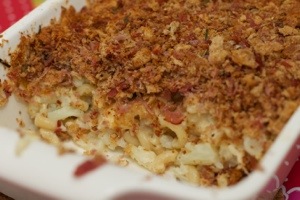
One of the many fabulous dishes America welcomed with me when I first arrived here nearly 13 years ago, is a bubbly & cheesy mac straight out of a hot oven.

Sure, there are oven-baked cheesy noodle dishes in Belgium too, but they’re falling dramatically short from the cheesy, creamy deliciousness I’ve enjoyed on this side of the Atlantic. For starters, Belgian macaroni and cheese dishes lack flair and creativity, in my opinion. Almost as if nobody cared to explore the culinary possibilities of this American staple. Overall, I think American cuisine gets a bad wrap in Europe due to all the sub-par hamburger chains and cheap fast food joints that are being lobbied as a slice of ‘real’ American life. It’s entirely false, and I’ll come right out saying that I’ve enjoyed some amazing cooking & food here. So to whomever put mac ‘n cheese on the culinary map, I thank thee! (Oh, and a special thank you shout-out to Vermont extra-sharp white cheddar, Maine lobster, Alaskan king salmon, Georgia peach cobbler, Boston cream pie, Mississippi mud pie, California avocados, Texas BBQ, Missouri’s St. Louis style ribs, Hawaii’s macadamia nut crusted mahi mahi & pupus, New York cheesecake… Yeah, I rest my case).

Over the years, I’ve played around with many mac ‘n cheese recipes I found online, but I finally settled on my own creation below, which is more of a grown-up mac and has bit more depth of flavor. I hope you enjoy it as much as my family & I do.

20130728-111857.jpg

FIVE CHEESE MAC
(Adapted from a variety of recipes I found online)
For the cheese sauce:
– 1 quart of milk
– 1/2 cup of flour
– 8 Tbsp of good quality butter
– 1/4 cup of buffalo hot wing sauce (*)
– 6 oz of Brie, sliced with rind on
– 12 oz of Gruyere (or Swiss cheese), grated
– 6 oz of extra-sharp white cheddar, grated
– 6 oz of mild cheddar, grated
– 4oz of blue cheese, crumbled
(*) I shamelessly stole this idea from the Hard Rock Cafe in Hollywood! It gives the sauce a bit of a kick in the pants.

Make a simple bechamel sauce, by melting the butter in a pan and adding the flour. Cook for a minute until flour & butter are one, then add milk and stir until all lumps are gone. Bring to a simmer and stir until the sauce thickens. When thick, remove from heat and incorporate all cheeses into hot sauce. Add buffalo wing sauce and season with salt & pepper to your liking. Add a pinch of nutmeg.

For the mac ‘n cheese:
– 12 slices of thick cut bacon
– 1 cup of breadcrumbs or crushed corn flakes (I use corn fakes because they add a nice touch of sweetness)
– 2 Tbsp of melted butter
– 2 boxes of elbow macaroni or cavatapi, or another kind of small pasta noodle.
– 3 Tbsp of finely chopped fresh rosemary (optional)

Heat oven to 400F. Lay bacon slices out on a foil-lined baking sheet, bake in the hot oven for 15-20 minutes until browned and crisp. Set aside and let cool slightly until your are able to crumble the bacon by hand. Turn oven down to 350F.

In the meantime, bring large pot of water to a boil and cook pasta according to box instructions until “al dente”.

Drain cooked pasta and place in a large oven dish. Pour cheese sauce over it and crumble bacon all over the top. Fold sauce and bacon into the pasta, then sprinkle the top with the breadcrumbs or corn flakes and drizzle melted butter evenly over the top. Sprinkle top with chopped rosemary. Bake for 45min or so until it’s bubbly and the top layer has crisped.

So good!

Chicken with 40 Cloves of Garlic

23 Jul

No. This isn’t a typo. I literally do mean 40 cloves of garlic. I encourage you to fight the good fight for as long as you can, because once your taste buds cross over to the garlicky side, there is no turning back.

‘Allium Sativum’, or common garlic, and I have been going steady since my childhood. Because of our Mediterranean seaside vacations in the South of France, where – let’s face it – people practically take garlic baths, we were exposed to garlicky deliciousness from a very young age. I remember being handed a fresh clove of garlic to rub on toasted, crusty French bread from as early as I had the fine motor skills to do so. It is no wonder that when mom produced this miracle poultry on our dinner table one time, we all succumbed to its culinary super powers and it instantly became a staple in our family’s food pyramid. As children, we’d get excited and bickered over who got to crack the dough seal off of the pot. And as adults, we loved the aroma that caressed our nostrils as soon as the lid came off.

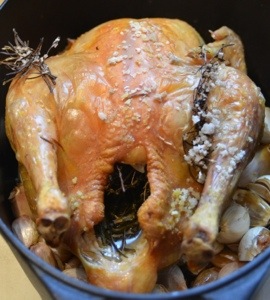
I’m warning you right now, that this is by far the juiciest and most flavorful chicken you’ll ever put in your mouth, so unless you’re willing to cook this on a regular basis, don’t do it.

20130723-124017.jpg

CHICKEN WITH 40 CLOVES OF GARLIC
(as per mom’s recipe)
– 1 capon or large roasting chicken
– a few sprigs of fresh rosemary
– a few sprigs of fresh thyme
– a handful of fresh Italian parsley
– a handful of fresh basil
– 1 laurel leaf
– 1 fresh lemon, quartered
– 40 cloves of garlic, in their skin (approx. 4-5 bulbs)
– approx. ¼ cup of extra virgin olive oil
– salt & pepper, to taste
– 3 cups of flour, ½ cup of water & oil (for the seal)
– 1-2 tbsp of soft butter

Preheat oven to 350F. Rinse the chicken and pat dry, then salt & pepper the cavity. Take roughly about ¾ of all the fresh herbs, and stuff them in the cavity together with the fresh lemon. Rub salt & pepper on the outside and under the skin, and rub the chicken with a bit of butter.

Smash the bulbs of garlic on your counter top, and separate all the cloves. Remove the loose, rough outer leaves, but leave each clove in its own peel. Chop the remainder of the fresh herbs finely.

In a heavy large oven-proof & lidded pot (such as a Dutch oven), add the olive oil, fresh herbs and 40 cloves of garlic all at once, and stir/sauté for just a minute or two. Place chicken on top of the garlic & herbs.

Make a flexible yet firm dough from the flour, water & oil. Roll into a sausage and line it alongside the edge of your pot. Place the lid on top and gently press it down into the dough, creating a glue-effect. The idea is to seal the pot completely, so no air can escape whilst cooking… trapping all the flavors inside.

Place the pot in the middle of the oven, and cook for approx. 1 ½ to 2 hours, depending on the size of the chicken. For crispy skin, remove lid from pot (you’ll have to crack it open!) for the last ½ hour of cooking so the skin can brown a bit, however, doing so will allow all the delicious flavors to escape and mellow out a bit… I’m not a chicken-skin aficionado, so I usually don’t care about crispy skin and leave my pot closed. This will be your call, really.

When the chicken is done, take it out of the pot and scoop up the cloves of garlic that have now browned and caramelized in the chicken juices. You can quite literally squeeze them out of their peel, and use the sweet, caramelized flesh to mix into mashed potatoes or schmear directly on crusty slices of French bread. Bon appétit!

Serve with any vegetable you like, but ‘Confit Byaldi’ is a great accompaniment.

Swedish Meatballs

22 Jul

The arrival of Swedish furniture giant Ikea not only brought us colorful & cozy Scandinavian home décor… but, more importantly, ‘kottbullar’! These tender morsels of beef & veal, in their creamy sauce and fruity lingonberry compote, sing their sweet siren song every time I happen to drive by the store alongside the 405 freeway. As soon as I see Ikea’s blue & gold logo in my line of sight, I feel a bubble of giddy excitement well up inside me and I nearly always feel compelled to pull off the freeway and stock up on a little bit of Europe in my otherwise American world. There’s something happy & cheery about Ikea, if it weren’t for the hoards of shoppers crowding the place on a daily basis.

Meatballs have long made their mark on Belgian cuisine as well. I think this is mainly because they pair so well with the warm fruity compotes you often find stewing in old-fashioned Belgian kitchens. I remember as a little girl, ‘omoe’ or grandma would brown up a batch of little meatballs and serve them with a sweet warm cherry sauce and chunky mashed potatoes. I have fond memories of those times, partly because grandpa would stuff his cheeks like a chipmunk and tell us stories in critter voice, much to the chagrin of grandma who felt it was not proper to indulge in such foolishness whilst having dinner. Occasionally, he’d lose a meatball and then all bets were off. Grandma would put an abrupt end to the silliness and grandpa would quickly follow suit for the sake of marital bliss and prompt us to be quiet and finish our plate. These moments of unbridled silliness never lasted long, but they shaped my memory of my beloved grandpa, who earned a PhD in biochemistry and was a professor emeritus at the renowned University of Ghent and super-cool kitchen table magician on weekends we visited. I think his world was filled with so much intellectual conversation and academic seriousness, that he enjoyed regaling his grandchildren with plain old silliness. Bless his soul in heaven.

As I got older and started paying my own bills, I developed a special affinity for the Swedish meatballs Ikea sold at bottom dollar. The recipe remains a bit of a mystery as so many Swedes have their own family recipe that was handed down from generation to generation, but below is my take on this beloved dish.

20130722-193259.jpg

SWEDISH MEATBALLS
(adapted from a recipe by Jeroen Meus)

For the meatballs:
– ½ lbs of lean ground beef
– ½ lbs of ground veal (or lean ground pork)
– 1 egg, yolk only
– ½ cup of breadcrumbs, soaked in 2-3 Tbsp of milk until just moistened through
– 1 Tbsp of allspice (or a combination of cinnamon, nutmeg & ground cloves)
– 2 shallots, very finely chopped
– salt & pepper
– beef broth, for boiling the meatballs before browning them

Take a large bowl and place the ground meats inside. Chop the shallots very finely and sauté in a little bit of butter until they turn translucent. Add the sautéed shallots to the bowl with the ground meats.

Add allspice and egg yolk to the meat mixture, and combine well. Add soaked breadcrumbs, and combine until everything is well incorporated. Add salt & pepper to taste.

Bring beef broth to a boil and drop 1.5-inch rolled meatballs into hot broth. Cook for approx. 4-5 minutes until done, and set aside on a plate. Once the meatballs are done, they’ll automatically float to the top.

In a heavy skillet, melt a few tablespoons of butter and quickly brown meatballs to a crispy golden brown, approx. 3 minutes.

For the creamy sauce:
– 4oz of heavy cream
– a splash of cognac (or cooking sherry)
– salt & pepper to taste

In the pan with the browned bits of the meatballs, add a hefty splash of cognac and ignite. You can do this with a match or – if you have a gas stove – by tilting your pan into flame, being careful not to spill the liquid. Stand back, as your pan will become enflamed for a few seconds.

Stir and scrape all the flavorful browned bits from the meatballs from the bottom of the pan, then add the cream and reduce the brown sauce a bit until it thickens. Add browned meatballs and toss to coat in the sauce.

Serve with mashed potatoes and a spoonful of cranberry sauce.