Archive | Appetizers & Finger Food RSS feed for this section

Creamy Herbed Pea Soup

15 Aug

Ask my mother what my favorite vegetable is, and she’ll loudly proclaim: ‘SWEET PEAS!’. Well, she’d actually say ‘zveet peez!’, what with her having learned English by watching subtitled episodes of ‘The Golden Girls’ and all. (On a side note: they eat surprising few peas those golden girls!).
I’ve been in love with crisp fresh English peas for decades. Seeing them happily clinging together in their tiny pods, reminds me of lazy Summer weekends hanging out on the porch and sipping ice cold tea with your best girl friends. I know it’s a stretch, but stay with me…

With pea season arriving right around the time the winter chill leaves the early morning air, there’s nothing that stops me from planting my pajama-clad ‘derriere’ in one of our floral cabana patio chairs, armed with a mug of coffee and a bowl of fresh English peas for hulling. With the canopy of a big fat loquat tree shading our patio, I usually get the company of a few humming birds whizzing about and/or house finches, chirping loudly over who gets to perch on the top tier of our birdfeeder. These kind of lazy Sunday mornings are my favorite. The ‘house men’ are night owls and tend to sleep in late, so I have our cozy apartment all to myself, with the cats snoozing in the morning sun somewhere inconvenient or doing their cute feline chit-chattering thing to the birds in front of the open window, secretly plotting for you to break a leg as you try to avoid stepping on them when you walk back inside with a bowl of hulled peas.

I like hulling peas. Seeing them bounce around on the bottom of the bowl as they come cascading in with the help of my thumb, I can’t help but think it must feel like a roller-coaster ride to them… I’ve always had a vivid imagination. It doesn’t help much that my office cubicle overlooks the take-off & landing strips of Los Angeles International airport, and I occasionally find myself day-dreaming about being sprawled out in a polka dot bikini on an exotic white sand beach with coconut palms swaying back & forth… That is, until the roaring engine of Air Tahiti Nui’s flight #85 approaches and thunders by my 6th floor office window, which usually sets off an overly sensitive car alarm or two. I’m instantly reminded that Century Blvd isn’t even remotely near Tahiti, and if I dare squeeze my curves into a tiny polka dot bikini, I’d risk getting a ticket for bringing the human form into disrepute. But we were talking about peas… See what I mean with vivid imagination?! Sheesh.

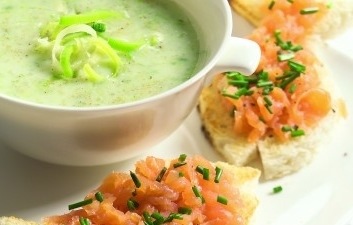
Last Spring, I came home with a 5 lbs bag of fresh English peas from the farmers market. We pretty much ate pea-anything that week. It was as if we were on a 7-day pea cleansing program, which I’m sure exists somewhere here, in Beverly Hills or so. Among many other green adventures, I made the Summer soup below. It’s served cold, like gazpacho, and it’s such a refreshing dish on a hot Summer day, but if you like, you could eat it warm too… Aren’t peas just awesome?!
20130815-182319.jpg

CREAMY HERBED PEA SOUP
(A Hungry Belgian original)
– 1 large shallot, diced
– 1-2 Tbsp of grapeseed oil (or light olive oil)
– 2 3/4 cups of chicken broth
– 1/4 cup of Pinot Grigio (or other crisp white wine)
– 1.5 lbs of fresh peas (or equal amount of frozen peas)
– 1/3 cup of heavy cream
– 1 Tbsp of fresh mint, chopped very finely
– 1 tsp of fresh tarragon, chopped very finely
– 2 Tbsp of fresh parsley, chopped finely
– 1 Tbsp of fresh chives, chopped finely
– zest of 1 small lemon
– salt & pepper, to taste
– crème fraiche, for garnish
– 1/2 leek, thinly sliced, for garnish (optional)

In a sauce pan, add oil and sauté shallots over medium heat until softened, but not browned! Add broth, wine and peas, and simmer until peas are mostly tender but still bright green. Remove from heat and add lemon zest. In a blender, or with a hand-mixer, blend the soup so it’s smooth and lump-free. It should be a fairly thick but liquid consistency. Pour blended mixture into a bowl and set in iced cold water to cool the soup quickly and retain its bright green color. (Make sure the ice water won’t pour into your soup!)

When soup feels cool enough to the touch, add cream & herbs. Season with salt & pepper to taste, and serve in bowls. Swirl a dollop of crème fraiche through it and sprinkle with a few of the shavings of leek, for garnish.

Pairs really nice with smoked salmon toast or cold shrimp. Yum!

Fig Tartlets with Goat Cheese & Honey

13 Aug

Ah… Fresh figs!

20130813-083918.jpg

I love everything about fresh figs, really. The sweet stickiness that lingers on your lips, the earthy smell, the bright red flesh that offsets the crisp green or deep dark purple of the skin, the plump texture with just the right amount of crunch form the tiny seeds… I even like the shape of the bright green leaves and the knottiness of the tree branches. Let it be known that if I were to reincarnate as a tree, I’d like to come back as a fig tree.

Mom must have loved figs too, because I remember us bringing back a few saplings during one of our vacations in the South of France. Mom carefully nursed them on our dining room window sill, where the afternoon sunlight would caress their tiny organic bodies and would cause their little leaves to quiver from the warmth. The next Spring, we planted two of them in the backyard, in a post-winter ritual involving partially decomposed dog doodoo and a rusty shovel (with possibly some canned banana shoved in the hollow handle) (*). We didn’t hold much hope for the saplings’ survival of the first brutal Belgian winter that would be nipping at their fragile roots come November, nor did we expect for them to thrive in our cold, wet climate. Despite all odds being stacked against them, these little knotty fig trees have grown to reach the edge of my mom’s single level’s rooftop over the years. Overwhelmed by the amount of fruit they’d produce every late Summer thru early Fall, we couldn’t keep up with the harvest and… well… let’s just say that the crows & squirrels of the ‘Jasmijnenlaan’ were well fed.
(*) For more intriguing story lines of ‘canned bananas’, please read my banana butter post here.

I realize that figs are expensive outside of Southern California. Lucky for me, however, I happen to live in a dry, sunny climate, similar to the Mediterranean where fig trees thrive. Even better is that ‘fig season’ actually comes in 2 installments… The first crop, named the ‘breba’ crop, grows from branches that sprouted the previous year and is the harvest that begins in late Spring. It’s a fairly short-lived season, usually with the last crops harvested around early Summer. The second & larger harvest, sprouting from this year’s branch growth, begins in mid-August and runs as late as October for some varieties. This means that, with a bit of clever pre-planned farmers market hopping, I can actually enjoy fresh figs with nary a hiccup through fall. Most of the figs around here are ‘Brown Turkey’ figs or ‘Black Mission’ figs, with the deep purple black mission fruit usually having a more intense fig flavor. Later in the summer, you see ‘Kadota’ figs and ‘Calimyrna’ figs. Kadota figs are used mostly for drying, but the bright green Calimyrna’s are excellent for eating raw as well. ‘Adriatic’ figs and striped tropical ‘Panachée’ figs are quite scarce over here, so if you see them, grab them.

If you’ve never eaten fresh figs before, don’t be alarmed. When ripe, there are few fruits that compare to their sweet juiciness and I know you’ll love them too. Simply rinse the whole fruit, trim the stems back a bit and sink your teeth in like you would a strawberry. On the other hand, fresh figs are a treat when roasted in the oven with some goat cheese or chopped in salads, or you can bake them into a sweet or savory tart like I did below.

20130813-084345.jpg

FRESH FIG TARTLETS WITH GOAT CHEESE & HONEY
– 4 pieces of puff pastry, sliced into 6-7 inch rounds (or squares)
– 5-6 oz of soft, mild goat cheese (or if you don’t like goat cheese, use ricotta)
– 2 Tbsp of fresh oregano, chopped
– 1 tsp of lemon zest
– 6 fresh figs, sliced fairly thinly (like you would a lemon)
– Honey, for drizzling
– Salt & pepper

Preheat oven to 350F.

Line a baking sheet with parchment paper and place 4 puff pastry rounds on top, spaced approx. 1.5-inch apart. In small bowl, soften goat cheese with some salt & pepper to taste, and the lemon zest. Divide goat cheese mixture evenly over the center of the puff pastry rounds, making sure to leave approx. 1 inch of the edges clear. Sprinkle chopped fresh oregano over the goat cheese.

Place fresh fig slices over the goat cheese to more or less cover. Fold the edges of the pastry over themselves just a little bit, so you get a bit of a thicker edge on the outside.

Bake the tartlets in the oven for approx. 15 min until the edges are puffed and the center looks caramelized and somewhat gooey. Drizzle some honey over the top and serve warm.

Belgian Endive Salad with Blue Cheese & Walnuts

12 Aug

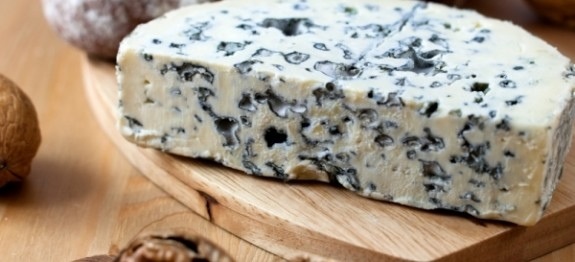
A few weeks ago, I wrote a tidbit about crunchy & faintly bitter ‘witlof’ in a post featuring a delicious Summer red beet, apple & fennel slaw. Authentic ivory-colored Belgian endive tends to be expensive over here, but you can find the red variety in California fairly easily and at a much lower cost. In order for the leaves of ‘witlof’ to stay a pearly white, it needs to be grown and tended to in a dark, cool & temperature-controlled environment. With this wisdom uncovered, I’ve always been baffled as to why the USA seemingly can’t reproduce this elegant chicory variant, so a few years ago, I set out on a ‘witlof’ mission… Inspired by this beauty, which makes my Belgian heart pine for witlof each and every time:

20130812-114414.jpg
(Photo courtesy ‘Roquefort Cheese Co’)

Back then, my local ‘Henry’s produce & farmers market’ was kind enough to aide me in my quest to understand witlof pricing in the US, and summoned their Regional Purchasing Manager to explain a few chicory facts to me. As luck may have it, Mr. Roden happened to in town that morning, and showed up clasping a leather-bound file folder tightly in his arm pit, whilst gently cradling a white and a red chicory root in the palm of his aging hands. “The ‘real’ Belgian endive”, he says in a serious teacher tone of voice whilst holding up the all-ivory root, “has to be imported from Belgium”. He continues stating that it is usually packaged and shipped to the USA in 10 lbs boxes. Because the vegetables are exposed to sunlight during transport, it causes these tender delicate roots to develop their natural, greenish color. As a result, each box has to be unpacked upon arrival at the East Coast, with each individual root of ‘witlof’ needing to be stripped of its outer leaves by hand and subsequently repackaged to be distributed to the rest of the country. “All of this is very labor-intensive and thus costly”. I nod my head in agreement.

Another cost-factor”, he continues, “is that much of the endive grown in Belgium is grown artisanally by a method called ‘forcing’”. In Belgium, many farms that grow endive use this labor-intensive agriculture which involves replanting the chicory root by hand. That replanting process, called ‘forcing’, must take place in a darkened, temperature-controlled room. Twenty-one days after the roots are planted, employees then crouch down on hands & knees, scrape the dirt off the endive and harvest it. I look bewildered. He continues that after decades of seed trials and piddling around, the USA managed to grow a red variety hydroponically (i.e. in water), eliminating the need for workers to hand-wash the dirt off of the roots and eliminating much of the shipping- & import costs. Unfortunately, growing endive still involves a costly production process that is labor intensive.

I thank Mr. Roden for his time in sharing his knowledge with me, and sheepishly add that I’m from Belgium and miss being able to afford Belgian endive now that I live on this side of the Atlantic Ocean. He shakes my hand firmly and promises that the red variety virtually has no difference in taste, which prompts my confession that the pearly white roots simply hold nostalgic value to me. I think I inadvertently struck a chord in the somewhat stern older man, because on my way out of the store, the clerk I spoke with earlier, stopped me in my tracks and handed me a bag of ‘real’ Belgian endive, “courtesy of Mr. Roden”, she winks with a smile.

With its faint bitterness, witlof is a bit of an acquired taste. However, paired with the sweetness of a ripe apple and the creamy sharpness of a marbled blue cheese, this bitterness dissipates and melds beautifully with the other flavors introduced in the salad.

20130812-115257.jpg

BELGIAN ENDIVE SALAD WITH BLUE CHEESE AND WALNUTS
For the salad:
– 3 Belgian endives, washed and torn into individual leaves
– 1 sweet apple, peeled and sliced into thin wedges
– 4 oz of blue cheese, crumbled into chunks
– 1/3 cup of walnuts, roughly chopped

Peel & discard outer leaves of the endives. Remove inner leaves individually and arrange on a serving platter. Toss thinly sliced apple wedges over the endives and sprinkle crumbled blue cheese & chopped walnuts over the top. Drizzle dressing over the top.

For the dressing:
– ¼ cup of champagne vinegar
– ¾ cup of olive oil
– 2 tsp of Dijon mustard
– ½ tsp of fresh grated garlic
– 1 egg yolk, room temperature
– salt & pepper, to taste

In a non-reactive bowl, add vinegar, mustard, egg yolk & garlic and whisk until well-combined. Continue whisking and slowly pour in olive oil until the vinaigrette is emulsified. Season with salt & pepper to taste.

Naughty & Nice Hot Pepper Jelly

9 Aug

My burning love for hot peppers, all pun intended, didn’t fully develop until I hit Californian soil and damn near scorched the skin off my upper lip with a habanero chile salsa, because “how hot can it be?!” , she said with an air of disbelief.

Right. Carry on…

Unlike many Southwest natives, I didn’t grow up with chiles. As a matter of national embarrassment, I don’t even recall ever having seen hot peppers in my Flemish grocery store? Then again, cooking with hot peppers was such an oddity in Belgium in the early 1990’s, that I may have unduly ignored peppers altogether. It’s a dark void in my memory, like that time where I lip-synced Duran Duran’s ‘Hungry like the wolf’ in my bathroom and got caught. Don’t ask. It’s too painful.

After all these years, I’m slowly but surely learning to navigate my way around the many varieties of spicy hot peppers. Occasionally, however, my inner-Sacagawea brazenly surfaces during farmer’s market strolls and I inadvertently end up destroying a Flemish taste bud or two, encouraged by this kind of peppery food porn:

20130809-193758.jpg

The idea of a hot pepper jam didn’t even occur to me until my colleague Alex channeled her inner-foodie and excitedly told me about ‘the best’ jam she’s ever eaten! She confessed she could smear it on just about everything… well, maybe not everything. Either way, we made a pact that I would try my hand at recreating her fantastic pepper jelly, if she became a follower on my blog. I’m totally cheap that way.

I know how to make jam as Belgians are big on canning and preserving sunshine, what with our 9 months of rain and all, so I accepted the challenge. This jelly turned out beautifully and so flavorful! And yes, I too will boldly smear this on anything that will hold its deliciousness…

20130809-232503.jpg

NAUGHTY & NICE HOT PEPPER JELLY
(Adapted from a recipe by ‘River Cottage Preserves’)
– 1.5 lbs of sweet peppers (red, yellow or orange), approx. 3-4 large
– 3 small scotch bonnet peppers or habanero peppers (*)
– 3 red jalapeno peppers (*)
– 1 medium size red onion
– 1 1/4 cup of apple cider vinegar
– 2.5 cups of white sugar
– 1/2 cup of dry white wine
– a pinch of red pepper flakes
– a small pinch of saffron
– 1.5 oz of fresh grated ginger
– zest of 2 lemons
– 1.5 oz powdered pectin
(*) you can use any combination of peppers you like. For a few pointers, check out my friend Debi’s blog over at Life Currents)

Chop sweet peppers in half, removing bitter white ribs and seeds. Slice into thin ribbons, then into small dice. Chop onion into very small dice as well. Peel and grate (or finely chop) the ginger.

Scratch whatever itch you may have on your face now, because you’re done touching your face for the next few minutes!

Chop hot peppers in half, remove white-ish ribs and seeds, and chop into very fine dice. Try not to breathe through your nose or touch any sensitive areas, as the capsicum in these babies will avenge you get to you.

In a heavy, non-reactive pan, place sweet & hot peppers, grated ginger and onions and pour apple cider vinegar & white wine over them. Sprinkle pepper flakes on top and slowly bring to a simmer.

When simmering, add saffron, lemon zest and sugar, and stir until sugar is dissolved. Bring to a rolling boil, then add pectin. Boil hard for 6 minutes to activate the pectin. Remove pan from heat and set aside for 20 minutes.

Ladle jam into small glass jars, and let cool… Or alternatively, for a longer shelf-life, process in a water bath or canning machine.

This jam will remain fresh in your fridge for approx. 1 month.

Baba Ganoush with Goat Cheese & Olives

29 Jul

In my post about Moroccan Spiced Meatloaf, I mentioned that I was at one time blessed to have lived in the buzzing, ethnic heart of Ghent, Belgium’s third largest city and melting pot of all kinds of Eastern cuisines.

I first discovered ‘Baba Ganoush’ in a small, dimly lit Turkish restaurant, complete with ornate belly-dancers and Kelim-covered poofs that served as seats around the knee-high, mahogany table tops. We had made our reservations a few weeks ahead of time, but when we arrived, somehow our reservation got botched and we had to wait well over an hour for our table. It turns out that this was actually a blessing in disguise, as the incredibly hospitable owner catered to us with gratuitous grilled pita bread and baba ganoush. Farouk, the bartender who made sure we weren’t thinking about the time that passed, kept the wine & conversation flowing with flair, and in the end, we sort of regretted being escorted to our table. To me, baba ganoush represents the warmth & earthy deliciousness of the flavorful ethnic dishes you find in the many small, family-run eateries in Belgium’s urban areas. Just like Mexican cuisine has become a staple in every day living in California, shoarma, doner kebab & things like baba ganoush are part of every day life in Belgium.

If you’ve never heard of baba ganoush, I urge you to keep an open mind as all it really is, is nothing more than a silky smooth & velvety roasted eggplant dip. It’s truly a bit of heaven in a small bowl. It’s perfect on bread or with pita chips, but also as a dip for roasted vegetables or a spread for sandwiches. It’s very versatile, and you’ll understand why the minute your lips meet this Middle-Eastern treasure.

20130730-125605.jpg

BABA GANOUSH WITH KALAMATA OLIVES & GOAT CHEESE
(Adapted from a recipe by ‘The Magic Carpet’)
– 2 large eggplant(s), whole
– 3-4 cloves of garlic, grated (use more for garlicky, and less for mild)
– 1 scallion, finely chopped
– 1/4 cup of tahini (*)
– 3 Tbsp of mild soft goat cheese (or thick Greek yogurt)
– juice of 1 small fresh lemon
– 1/3 cup of finely chopped fresh flat-leaf parsley
– 1 tsp of ground cumin
– 1 tsp of smoked paprika
– 1/3 cup of finely chopped kalamata olives
– salt & pepper to taste
(*) Tahini is a paste that is similar in texture than peanut butter, but made from sesame seed, instead. It can usually be found at local specialty grocery stores.

Heat oven to 375F (200C). Wash eggplant and prick them all over with a fork. Roast in the oven, whole, for approx. 45-60 minutes until the skin is blackened and the flesh is soft.

Let cool and peel eggplant. When they are soft and perfectly roasted, this should be very easy.
Slice off the top of each eggplant and place peeled flesh in a large bowl, together with the garlic and spring onion. Purée with a hand mixer until you get a smooth consistency, or mash it all by hand with a fork.

Add the tahini, lemon juice, goat cheese, spices and chopped parsley, and stir together until well combined. Season with salt & pepper to taste. Add a pinch of cayenne pepper for a bit of heat.

Heap chopped olives on top. Drizzle with olive oil, sprinkle some toasted pine nuts over the top, and serve with wedges of pita bread or grilled toast.