Tag Archives: vegetarian

Creamy Herbed Pea Soup

15 Aug

Ask my mother what my favorite vegetable is, and she’ll loudly proclaim: ‘SWEET PEAS!’. Well, she’d actually say ‘zveet peez!’, what with her having learned English by watching subtitled episodes of ‘The Golden Girls’ and all. (On a side note: they eat surprising few peas those golden girls!).
I’ve been in love with crisp fresh English peas for decades. Seeing them happily clinging together in their tiny pods, reminds me of lazy Summer weekends hanging out on the porch and sipping ice cold tea with your best girl friends. I know it’s a stretch, but stay with me…

With pea season arriving right around the time the winter chill leaves the early morning air, there’s nothing that stops me from planting my pajama-clad ‘derriere’ in one of our floral cabana patio chairs, armed with a mug of coffee and a bowl of fresh English peas for hulling. With the canopy of a big fat loquat tree shading our patio, I usually get the company of a few humming birds whizzing about and/or house finches, chirping loudly over who gets to perch on the top tier of our birdfeeder. These kind of lazy Sunday mornings are my favorite. The ‘house men’ are night owls and tend to sleep in late, so I have our cozy apartment all to myself, with the cats snoozing in the morning sun somewhere inconvenient or doing their cute feline chit-chattering thing to the birds in front of the open window, secretly plotting for you to break a leg as you try to avoid stepping on them when you walk back inside with a bowl of hulled peas.

I like hulling peas. Seeing them bounce around on the bottom of the bowl as they come cascading in with the help of my thumb, I can’t help but think it must feel like a roller-coaster ride to them… I’ve always had a vivid imagination. It doesn’t help much that my office cubicle overlooks the take-off & landing strips of Los Angeles International airport, and I occasionally find myself day-dreaming about being sprawled out in a polka dot bikini on an exotic white sand beach with coconut palms swaying back & forth… That is, until the roaring engine of Air Tahiti Nui’s flight #85 approaches and thunders by my 6th floor office window, which usually sets off an overly sensitive car alarm or two. I’m instantly reminded that Century Blvd isn’t even remotely near Tahiti, and if I dare squeeze my curves into a tiny polka dot bikini, I’d risk getting a ticket for bringing the human form into disrepute. But we were talking about peas… See what I mean with vivid imagination?! Sheesh.

Last Spring, I came home with a 5 lbs bag of fresh English peas from the farmers market. We pretty much ate pea-anything that week. It was as if we were on a 7-day pea cleansing program, which I’m sure exists somewhere here, in Beverly Hills or so. Among many other green adventures, I made the Summer soup below. It’s served cold, like gazpacho, and it’s such a refreshing dish on a hot Summer day, but if you like, you could eat it warm too… Aren’t peas just awesome?!

20130815-182319.jpg

CREAMY HERBED PEA SOUP
(A Hungry Belgian original)
– 1 large shallot, diced
– 1-2 Tbsp of grapeseed oil (or light olive oil)
– 2 3/4 cups of chicken broth
– 1/4 cup of Pinot Grigio (or other crisp white wine)
– 1.5 lbs of fresh peas (or equal amount of frozen peas)
– 1/3 cup of heavy cream
– 1 Tbsp of fresh mint, chopped very finely
– 1 tsp of fresh tarragon, chopped very finely
– 2 Tbsp of fresh parsley, chopped finely
– 1 Tbsp of fresh chives, chopped finely
– zest of 1 small lemon
– salt & pepper, to taste
– crème fraiche, for garnish
– 1/2 leek, thinly sliced, for garnish (optional)

In a sauce pan, add oil and sauté shallots over medium heat until softened, but not browned! Add broth, wine and peas, and simmer until peas are mostly tender but still bright green. Remove from heat and add lemon zest. In a blender, or with a hand-mixer, blend the soup so it’s smooth and lump-free. It should be a fairly thick but liquid consistency. Pour blended mixture into a bowl and set in iced cold water to cool the soup quickly and retain its bright green color. (Make sure the ice water won’t pour into your soup!)

When soup feels cool enough to the touch, add cream & herbs. Season with salt & pepper to taste, and serve in bowls. Swirl a dollop of crème fraiche through it and sprinkle with a few of the shavings of leek, for garnish.

Pairs really nice with smoked salmon toast or cold shrimp. Yum!

Wine Braised Cabbage with Plums & Bacon

14 Aug

The other day, I discovered a smoked turkey sausage in the back of my fridge. With ‘it’ being far removed from my much more popular non-processed food corner, I didn’t even catch its presence until famine set in and I nosied around in the fridge for a quick dinner idea, or shall we say, in a desperate attempt to save myself a trip to the grocery store. And there it was. Sitting proudly in the ‘man corner’ of the fridge, right next to the hot dogs and beer. I’m usually pretty good with keeping a detailed inventory of our fridge’s contents in the back of my mind, you know, in that special lobe that keeps track of all practical things, but that darn sausage snuck up on me. I’m not ‘big’ on things that have an unnatural and/or freakishly long shelf life, but with our finances seriously strapped these days, a sale on $5.00 smoked sausage goes a long way…

Just like Velveeta, I believe there’s a place for kielbasa in this world as well. However, when I bought that sausage, I must have not been entirely sure where exactly that place was. Come to think of if, this is probably why it ended up on the ‘man shelf’ in our fridge in the first place. Then, as per divine intervention, I remembered: ‘Rookworst met rode kool’! Braised red cabbage and sausage is not only popular in Belgium, but in Holland as well. Although our northern neighbor traditionally opts for braised kale or ‘boerekool’, rather than red cabbage. Either way, braised cabbage is everywhere in the lower lands and many a Flemish child grows up on that stuff.

With my flavor palette a bit more refined these days, I fancified my vocabulary this cabbage a little bit. Rather than braising it traditionally with just bits of apple and vinegar, I opted for a more flavorful combination of red wine, dried plums and bacon.

20130814-120306.jpg

WINE BRAISED CABBAGE WITH PLUMS & BACON
(A “Hungry Belgian” original…)
– 1 small head of red cabbage, shredded thinly or chopped finely (+/- 1.5 lbs shredded)
– 2/3 cup of good quality red wine + more for soaking (*)
– 2-3 shallots, chopped into small dice (or 1 medium size red onion)
– 10-12 dried plums, slivered
– 2 small pears, peeled, cored & diced
– 2 sticks of cinnamon
– 2 cloves
– 1 laurel leaf
– 4-5 slices of thick cut bacon, sliced into small slivers
– salt & pepper, to taste
(*) The age-old adage is: if you don’t like the wine for drinking, don’t cook with it either!

Soak plums in a bit of red wine to soften them. Place a large heavy pot or Dutch oven over high heat and brown the bacon until crisp. Remove from pot and set aside.

In the bacon fat, brown shallots until translucent. Then add shredded cabbage with wine, pears, spices and salt & pepper to taste, and fold so everything is well combined. Cover the pot and braise over medium-low heat for approx. 45 min until cabbage is soft. Add plums, and simmer 10-15 min more to allow most of the liquid to evaporate. Remove cinnamon, laurel leaf and cloves, and add bacon bits back in.

Serve braised cabbage alongside your preferred choice of crisp browned sausage links.

Belgian Endive Salad with Blue Cheese & Walnuts

12 Aug

A few weeks ago, I wrote a tidbit about crunchy & faintly bitter ‘witlof’ in a post featuring a delicious Summer red beet, apple & fennel slaw. Authentic ivory-colored Belgian endive tends to be expensive over here, but you can find the red variety in California fairly easily and at a much lower cost. In order for the leaves of ‘witlof’ to stay a pearly white, it needs to be grown and tended to in a dark, cool & temperature-controlled environment. With this wisdom uncovered, I’ve always been baffled as to why the USA seemingly can’t reproduce this elegant chicory variant, so a few years ago, I set out on a ‘witlof’ mission… Inspired by this beauty, which makes my Belgian heart pine for witlof each and every time:

20130812-114414.jpg
(Photo courtesy ‘Roquefort Cheese Co’)

Back then, my local ‘Henry’s produce & farmers market’ was kind enough to aide me in my quest to understand witlof pricing in the US, and summoned their Regional Purchasing Manager to explain a few chicory facts to me. As luck may have it, Mr. Roden happened to in town that morning, and showed up clasping a leather-bound file folder tightly in his arm pit, whilst gently cradling a white and a red chicory root in the palm of his aging hands. “The ‘real’ Belgian endive”, he says in a serious teacher tone of voice whilst holding up the all-ivory root, “has to be imported from Belgium”. He continues stating that it is usually packaged and shipped to the USA in 10 lbs boxes. Because the vegetables are exposed to sunlight during transport, it causes these tender delicate roots to develop their natural, greenish color. As a result, each box has to be unpacked upon arrival at the East Coast, with each individual root of ‘witlof’ needing to be stripped of its outer leaves by hand and subsequently repackaged to be distributed to the rest of the country. “All of this is very labor-intensive and thus costly”. I nod my head in agreement.

Another cost-factor”, he continues, “is that much of the endive grown in Belgium is grown artisanally by a method called ‘forcing’”. In Belgium, many farms that grow endive use this labor-intensive agriculture which involves replanting the chicory root by hand. That replanting process, called ‘forcing’, must take place in a darkened, temperature-controlled room. Twenty-one days after the roots are planted, employees then crouch down on hands & knees, scrape the dirt off the endive and harvest it. I look bewildered. He continues that after decades of seed trials and piddling around, the USA managed to grow a red variety hydroponically (i.e. in water), eliminating the need for workers to hand-wash the dirt off of the roots and eliminating much of the shipping- & import costs. Unfortunately, growing endive still involves a costly production process that is labor intensive.

I thank Mr. Roden for his time in sharing his knowledge with me, and sheepishly add that I’m from Belgium and miss being able to afford Belgian endive now that I live on this side of the Atlantic Ocean. He shakes my hand firmly and promises that the red variety virtually has no difference in taste, which prompts my confession that the pearly white roots simply hold nostalgic value to me. I think I inadvertently struck a chord in the somewhat stern older man, because on my way out of the store, the clerk I spoke with earlier, stopped me in my tracks and handed me a bag of ‘real’ Belgian endive, “courtesy of Mr. Roden”, she winks with a smile.

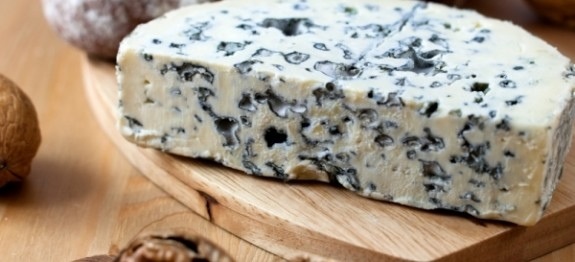
With its faint bitterness, witlof is a bit of an acquired taste. However, paired with the sweetness of a ripe apple and the creamy sharpness of a marbled blue cheese, this bitterness dissipates and melds beautifully with the other flavors introduced in the salad.

20130812-115257.jpg

BELGIAN ENDIVE SALAD WITH BLUE CHEESE AND WALNUTS
For the salad:
– 3 Belgian endives, washed and torn into individual leaves
– 1 sweet apple, peeled and sliced into thin wedges
– 4 oz of blue cheese, crumbled into chunks
– 1/3 cup of walnuts, roughly chopped

Peel & discard outer leaves of the endives. Remove inner leaves individually and arrange on a serving platter. Toss thinly sliced apple wedges over the endives and sprinkle crumbled blue cheese & chopped walnuts over the top. Drizzle dressing over the top.

For the dressing:
– ¼ cup of champagne vinegar
– ¾ cup of olive oil
– 2 tsp of Dijon mustard
– ½ tsp of fresh grated garlic
– 1 egg yolk, room temperature
– salt & pepper, to taste

In a non-reactive bowl, add vinegar, mustard, egg yolk & garlic and whisk until well-combined. Continue whisking and slowly pour in olive oil until the vinaigrette is emulsified. Season with salt & pepper to taste.

Naughty & Nice Hot Pepper Jelly

9 Aug

My burning love for hot peppers, all pun intended, didn’t fully develop until I hit Californian soil and damn near scorched the skin off my upper lip with a habanero chile salsa, because “how hot can it be?!” , she said with an air of disbelief.

Right. Carry on…

Unlike many Southwest natives, I didn’t grow up with chiles. As a matter of national embarrassment, I don’t even recall ever having seen hot peppers in my Flemish grocery store? Then again, cooking with hot peppers was such an oddity in Belgium in the early 1990’s, that I may have unduly ignored peppers altogether. It’s a dark void in my memory, like that time where I lip-synced Duran Duran’s ‘Hungry like the wolf’ in my bathroom and got caught. Don’t ask. It’s too painful.

After all these years, I’m slowly but surely learning to navigate my way around the many varieties of spicy hot peppers. Occasionally, however, my inner-Sacagawea brazenly surfaces during farmer’s market strolls and I inadvertently end up destroying a Flemish taste bud or two, encouraged by this kind of peppery food porn:

20130809-193758.jpg

The idea of a hot pepper jam didn’t even occur to me until my colleague Alex channeled her inner-foodie and excitedly told me about ‘the best’ jam she’s ever eaten! She confessed she could smear it on just about everything… well, maybe not everything. Either way, we made a pact that I would try my hand at recreating her fantastic pepper jelly, if she became a follower on my blog. I’m totally cheap that way.

I know how to make jam as Belgians are big on canning and preserving sunshine, what with our 9 months of rain and all, so I accepted the challenge. This jelly turned out beautifully and so flavorful! And yes, I too will boldly smear this on anything that will hold its deliciousness…

20130809-232503.jpg

NAUGHTY & NICE HOT PEPPER JELLY
(Adapted from a recipe by ‘River Cottage Preserves’)
– 1.5 lbs of sweet peppers (red, yellow or orange), approx. 3-4 large
– 3 small scotch bonnet peppers or habanero peppers (*)
– 3 red jalapeno peppers (*)
– 1 medium size red onion
– 1 1/4 cup of apple cider vinegar
– 2.5 cups of white sugar
– 1/2 cup of dry white wine
– a pinch of red pepper flakes
– a small pinch of saffron
– 1.5 oz of fresh grated ginger
– zest of 2 lemons
– 1.5 oz powdered pectin
(*) you can use any combination of peppers you like. For a few pointers, check out my friend Debi’s blog over at Life Currents)

Chop sweet peppers in half, removing bitter white ribs and seeds. Slice into thin ribbons, then into small dice. Chop onion into very small dice as well. Peel and grate (or finely chop) the ginger.

Scratch whatever itch you may have on your face now, because you’re done touching your face for the next few minutes!

Chop hot peppers in half, remove white-ish ribs and seeds, and chop into very fine dice. Try not to breathe through your nose or touch any sensitive areas, as the capsicum in these babies will avenge you get to you.

In a heavy, non-reactive pan, place sweet & hot peppers, grated ginger and onions and pour apple cider vinegar & white wine over them. Sprinkle pepper flakes on top and slowly bring to a simmer.

When simmering, add saffron, lemon zest and sugar, and stir until sugar is dissolved. Bring to a rolling boil, then add pectin. Boil hard for 6 minutes to activate the pectin. Remove pan from heat and set aside for 20 minutes.

Ladle jam into small glass jars, and let cool… Or alternatively, for a longer shelf-life, process in a water bath or canning machine.

This jam will remain fresh in your fridge for approx. 1 month.

Flemish Beignets

7 Aug

‘Oliebollen’ or ‘smoutebollen’, Belgium’s answer to American donuts, are firmly planted in youth sentiment for me. They bring back lots of teenage memories, of spending hour upon hour parading up & down the snowy fairgrounds with my friends, often in sub-zero temperatures, in hopes the cute fair hands would notice us and score us a free paper cone of hot beignets or a free ride.

When the weather gets dreary or downright mean, there’s nothing more comforting than to bite into a crispy hot ball of freshly fried dough, dusted with powdered sugar. The sugar instantly melts on the hot surface and forms a crackling coating on the outside of this deep fried dream. I’m telling you now, oliebollen are a ‘must have’ when the temps drop and your nose hairs are starting to congeal.

You can buy yourself some sugary warmth at the many quaint stalls that line the town squares in Holland & Belgium, and waft invitingly through the cold Fall & Winter air. Especially during the times the ‘kermis’ or fair is in town, or the annual Christmas Markets that start showing up in late November, both of which add much needed light & coziness to the short, dark evenings. I mean, just look at it:

20130807-213146.jpg
Doesn’t it look all warm and beckoning?

I figured that if I wanted ‘oliebollen’, I would have to learn to make them at home since Los Angeles is short on this kind of campy quaintness… and who can wait for the county fair to arrive… in July! No. I needed to have access to this greasy happiness in Fall & Winter, when evening temperatures drop well below 65F. Don’t judge.

I’ve probably spent too much time browsing the Internet for the perfect recipe, but the winning recipe came from a former colleague of mine, who was tasked by yours truly with the impossible mission of seducing prying the recipe out of our favorite ‘oliebollen‘ baker from the city fair in Ghent. I completely forgot about these, until I recently found her grease-stained email folded neatly in a cookbook of mine… Enjoy!

20130807-215157.jpg

OLIEBOLLEN
(aka Flemish beignets… per Marktkramer De Kuijper‘s recipe)
– 1.5 oz of good quality unsalted butter
– 10.5 oz of self-rising flour (or pastry flour or all purpose flour, if you can’t find self-rising flour)
– 1 oz of fresh yeast (or 0.5 oz of dry active yeast)
– 8 oz of whole milk
– 1 tsp of natural vanilla extract
– a pinch of salt
– 1.5 eggs (2 whites + 1 yolk)

Make sure to use room-temperature ingredients, and measure everything precisely!

In a large bowl, sift flour. In a small bowl, crumble fresh yeast into milk, and stir until dissolved. Add yeasted milk & vanilla extract to flour, and stir to create a batter.

Melt butter in the microwave on medium power, and add egg yolk and butter to batter. Stir until well combined.

Beat egg whites in a grease-free bowl until stiff peaks form. Gently fold into the batter, and also add a pinch of salt.
The batter should be fairly loose, so if it feels a bit too stiff, add a splash more milk.

Let the batter rest for 20-25 minutes while you fill a large Dutch oven with peanut oil and heat it to 375F. Use a candy thermometer to make sure the oil doesn’t overheat, which causes uneven cooking.

Use an ice cream scoop to drop 2-3 scoops of batter into the hot oil at a time. Cook each side until golden brown. Doughnuts will cook very quickly in the right temperature oil, so check them quickly after you place them in the oil. Flip and cook the other side. Don’t crowd your pot, as this will cause the temperature to drop too rapidly, causing uneven cooking and can potentially cause your pot to overflow, which is dangerous!

Use a spatula to take the beignets out of the oil and let them sit on a paper towel lined plate for a minute or so, to absorb the excess oil. Transfer to a plate in a warm oven while you cook the rest of them.

When done, dust with powdered sugar and prepare to eat more than one!

Sinful Chocolate Truffles

7 Aug

What could possibly be wrong with a sumptuous mouthful of cream, chocolate and butter? If your genetic profile is anything like mine, there’s a lot wrong with these delicious truffles. As a matter of fact, I might as well bypass my digestive system completely and stick these directly onto my hips and thighs, since I’m incapable of eating just one. Who can, really?

Belgium’s love affair with chocolate ‘pralines’ & truffles traditionally unfolds at various quaint country tables, adorned with one’s best china and grandma’s hand-embroidered floral table cloth. Neighbors and friends eagerly gather around to catch up on the latest small town gossip, and to reconcile important town data such as who is getting married to whom and what was it that Marie overheard whilst standing in line at the butcher’s? To facilitate these impromptu social gatherings, a pot of freshly brewed coffee is there to loosen the tongues and the sugary sweetness of truffles is presented to melt away the bitter shock of hearing that the elderly pastor now has a pretty new housekeeper… and why is she so young? Not proper, I say.

Coffee is consumed by the liter in rural Flanders & beyond. You can’t ring someone’s doorbell without being beckoned to sit down at the kitchen table and have an unsolicited cup of joe appear under your nose within the first 5 minutes of entering, usually followed by an invitation to grab something from a box of sweets that permanently lives in the middle of the table. To my mom’s generation, a knock on the door holds the promise of an exciting bit of town gossip and one must be prepared for this kind of opportunity 24/7. No Belgian household is without coffee or chocolate. It’s just not proper.

When I first moved to the USA, glitzy Los Angeles of all, I remember that random people I had never seen before would wave at me enthusiastically on the street or greet me with a smile during my visits back to small town Belgium. It later dawned on me that my move to ‘Aahhhh-merica’ must have been the topic of conversation during many such coffee-orgies, undoubtedly piquing the interest of people who did not know Cecilia’s brave and/or adventurous daughter yet. I’m sure the news of ‘Helga-sightings’ spread fast within the community, like I was some sort of rare caribou one had to look out for. My mother’s main agenda for my visit back home was to cram in as many coffee gatherings as a week would allow. The upside of this was homemade cookies & Leonidas truffles at each one…

The truffle recipe below is an old-fashioned, artisan recipe I found online years ago. I tweaked it for flavor & richness of texture, but it’s fairly authentic and you can proudly serve these in a bowl… on your granny’s hand-crocheted doily. For good measure.

20130807-125949.jpg

BASIC TRUFFLES
For the ganache:
– 8 oz of dark chocolate
– 4 oz of heavy whipping cream
– 2 oz of good quality unsalted butter

For the coating:
– 4 oz of dark chocolate, melted
– ½ cup of semi-sweet cocoa powder

In a bowl, break chocolate into bite-size pieces and set aside. In a small sauce pan, heat heavy whipping cream over a medium heat until very hot. Add butter and stir until butter is melted. Then pour hot cream mixture over chocolate pieces and stir until all chocolate is melted and you achieve a smooth mass. Place a piece of plastic wrap directly onto the surface of the chocolate mass, and refrigerate for a few hours until ganache is set.

When cold and stiff, take ganache out of the refrigerator. Using a double-boiler method, melt remaining chocolate for coating in a small saucepan. When melted and cool enough to handle, scoop small balls out of the ganache and gently coat them with the melted chocolate. Needless to say, coating the truffles is by far the messiest part of this recipe, but there’s no avoiding it so you might as well enjoy the mess. The best way to coat the truffles, is by gently rolling them around in the melted chocolate, using a chopstick or toothpick.

When coated, immediately take them out of the melted chocolate with a toothpick and roll them in a coating of your choice. Traditionally, semi-sweet cocoa powder is used, but you can also use chopped nuts, chocolate sprinkles, chocolate shavings, coconut flakes.. whatever you fancy, really.

Place the coated truffles on a parchment lined plate, and let harden in the fridge a little before serving.

ORANGE GRAND MARNIER TRUFFLES
Use basic truffle recipe above, and add the following in the ganache:
– 1-2 Tbsp of Grand Marnier or Cointreau liquor
– 2 Tbsp of freshly grated orange zest

Coat truffles with semi-sweet cocoa powder.

IRISH TRUFFLES
Use basic truffle recipe above, and add the following to the ganache
– 1-2 Tbsp of good quality Whiskey
– 2 Tbsp of very strong coffee

Roll truffles in white chocolate shavings.

WHITE CHOCOLATE TRUFFLES WITH HONEY & SAFFRON
Use basic truffle recipe above, but replace dark chocolate with white chocolate. Add the following to the ganache:
– a pinch of saffron
– 1 Tbsp of honey
– a splash of white rum

For the coating, use melted white chocolate and roll truffles in powdered sugar, unsweetened coconut flakes or very finely chopped almonds

20130807-130803.jpg

Pink Grapefruit & Limoncello Mousse

6 Aug

Last time my mom visited from Belgium, I randomly asked her if she still remembered those little cups of yogurt mousse she used to buy for us by the dozen. We were on our way to ‘Surfas’ kitchen supply store in Culver City, in search of organic black squid ink – don’t ask! There was nothing in particular that sparked my question, so it is entirely possible that I overwhelmed her with the randomness of it, but mom firmly stated that she had no idea what I was talking about and quickly concluded that I must be remember things wrong, because mom is always right… even when she’s wrong. It’s a Flemish miracle, really, and one that should be recognized by a ribbon from the Pope and possible sainthood.

I know that I didn’t dream up this deliciousness, because I still remember exactly what the packaging looked like and I remember that this fluffy delight came in lemon, strawberry and blueberry flavor. The tart, sweet lemon flavor was by far my favorite, and I recall I would secretly re-shuffle the containers in the fridge so that the lemon ones were always hidden from plain sight in the back of the fridge, thusly, increasing the odds of saving them for yours truly by 200%. I was stealth like that.

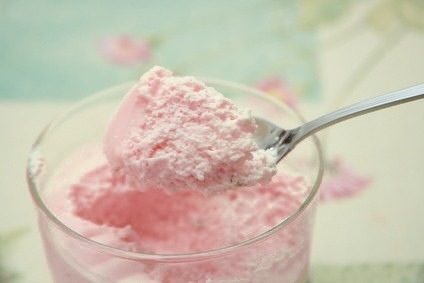
Besides custards, mousses are my next favorite dessert things. I love their airy, light fluffiness. It was only recently that the idea of a pink grapefruit mousse slapped me in the face, when I read an article about how incorporating this fruit into your daily diet promotes weight loss… and what better way to do it than with dessert? Right?

Yeah.

I’m sure this is not what the author had in mind, but whatever. Don’t rain on my culinary parade, please.

20130806-110645.jpg

PINK GRAPEFRUIT & LIMONCELLO MOUSSE
(Adapted from a variety of mousse recipes)
– 2 ruby red or pink grapefruit
– 6 oz of thick Greek yogurt
– 7 oz of heavy whipping cream
– 2 Tbsp of limoncello (or another citrus-flavored liquor)
– 3 egg whites
– a pinch of salt
– 4 sheets of gelatin
– 2 Tbsp of sugar

Place gelatin sheets into a bowl of cold water and allow it to swell. When gelatin is soft, pour cold water out of the bowl and add 2-3 Tbsp of very hot/boiling water and allow swollen gelatin to melt. Let cool slightly while you prepare the other ingredients.

Juice both grapefruits and strain juice so all fleshy bits and pits stay behind. Combine clear grapefruit juice with limoncello. Fold sugar into yogurt, and add juice. Beat yogurt mixture with handheld mixer until well-combined and somewhat fluffy. Taste for sweetness, if it’s too tart, add a bit more sugar.

Beat heavy whipping cream until it is firm & fluffy, but not super stiff. Fold it gently into the yogurt mixture, together with the lukewarm melted gelatin.

Beat egg whites with a pinch of salt until stiff peaks form, and gently fold these into the yogurt/cream mixture. Try to keep the air in the egg whites, as this will give your mousse a light, fluffy texture.

Divide mousse over 6 ramekins or small glasses, and allow to set in the refrigerator for at least 2-4 hours.

Belgian Rice Pudding with Saffron

5 Aug

‘Rijstpap’ or rice pudding is a much celebrated treat in Belgium, and it’s no coincidence why this rice dessert became a traditional regional dish in the Province of Brabant, encompassing the central heart of Belgium.

Every year in Flanders, from small rural towns to larger cities, this creamy dessert makes a star appearance during the annual ‘Brueghel Feesten’. These medieval-type festivities compare to the American renaissance fairs, but traditionally focus around food & drink whilst celebrating Flemish cultural heritage and the world-renowned artwork by ‘Master Painter’ Pieter Brueghel. During the 16th Century, Breughel’s work was highly sought after by the wealthy elite of the richer cities, and the humble ‘peasant’ painter was warmly embraced & respected in the high society circles of thriving medieval Brussels. His works mostly featured magnificent landscapes and bustling farm village life, often painted with a comical yet honest approach and illustrating the abundant food & drink at the festive farmers’ table in great detail. Since then, the often 2-day long ‘Breughel Feesten’, for which people dress up in traditional 16th Century peasant grab, are synonymous to copious amounts of free-flowing ‘tap’ beer, fantastic food and… plate after plate of creamy golden ‘rijstpap’.

Rijstpap made an appearance early on in Flemish history, and quickly became associated with rural life and heavenly simplicity. After all, as per an old Flemish folkloric saying, heaven welcomes you with bottomless bowls of rijstpap and golden spoons. I can’t testify to the veracity of this tale, but I’m on board!

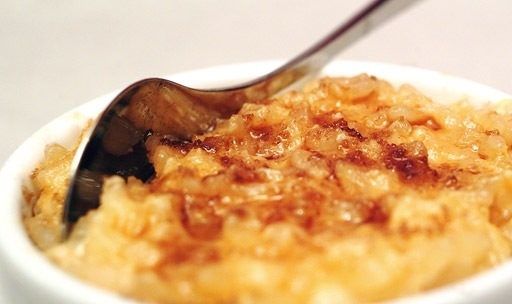
This sweet, milk-based porridge bears somewhat of a resemblance to American rice pudding, but not entirely. For starters, a traditional Belgian rice pudding is spiced with saffron & cinnamon, and not just vanilla. Secondly, the texture is more porridge-like (‘rijst’ meaning rice, and ‘pap’ meaning porridge) and not quite as sweet or sugary as a pudding. And lastly, the dessert is classically eaten with a hefty dusting of dark brown sugar, that slowly melts into a molasses-type syrup when it blends with the milky rice. It’s ridiculously good and it brings back many happy childhood memories of the ‘Brueghel Feesten’ for me…

20130805-144353.jpg

Belgian Rice Pudding
(As per a childhood recipe)
– 1 liter of whole milk (or approx. 32 fl oz)
– 4 oz of long grain, white rice (dry)
– 1 vanilla bean
– 1 stick of cinnamon
– 1-2 hefty pinch(es) of saffron (if you like the flavor & color of saffron, use 2. If not, use 1)
– 5 Tbsp of sugar

Add the milk, rice, and sugar in a heavy pot and bring to a simmer over medium heat, stirring occasionally with a wooden spoon to separate the grains. Add the cinnamon stick, vanilla bean and saffron threads, cover and simmer over very low heat for 30 minutes or more, until the rice is tender and has absorbed the milk. Do not stir the rice during this part of cooking.

Stir with a wooden spoon when rice is tender, to spread the saffron color evenly.

Discard the cinnamon and vanilla, scoop the rice pudding into small bowls and allow to cool completely. Sprinkle with dark brown sugar before serving.

Rose Water & Lemon Turkish Delight

4 Aug

Yesterday evening, I drifted into a beautiful Pinterest dream and stumbled upon picture after picture of gorgeous Polish and Turkish pottery.

There are times where I reminisce about my life in Belgium with somewhat of a pang of homesickness in the pit of my stomach, and seeing that beautiful pottery made me miss the Turkish markets in my town there. Compared to so much cultural history and ‘couleur locale’ (local ‘color’), California seems sterile at times, despite the Hispanic and Asian influence we’re inundated with over here. It’s not the same. I miss the public open-air markets in Belgium. They usually run once a week and are set up like our farmers markets over here, just with a lot more variety in goods and tremendously more local color. They bring together a variety of people, from the old bitties to the young hipsters, all in search of hot waffles and exciting market finds. The many vendors or ‘markt kramers’ are celebrities on their own turf, luring customers by loudly broadcasting their wares in a thundering voice and colorful language, or blatantly flattering the female population in hopes of piquing their interest. Market days were fun, even when temperatures dropped to single digits and rain puddles formed alongside the cobblestone streets.

One of the things I would regularly indulge in whilst browsing around on market days, was delicious ‘lokum’ or Turkish Delight. Sweet, gooey & soft, it was the perfect kind of treat to reward yourself with after a busy morning at the market, or to make you forget you’re entering your fifth week of nonstop pounding rain & howling wind. Paired with a hot cup of mint tea, it brings a bit of Oriental flair into your home and you can pretend you went shopping at the ‘casbah’ or Turkish bazaar.

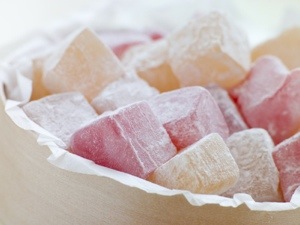
Turkish delight is easy to make. It’s traditionally flavored with rose water, like marzipan, but you can add whichever flavoring you prefer. I prefer the authentic rose water flavor, but I add in some fresh lemon juice as well. You could even add in some pistachio nuts, fresh mint leaves or a pinch of saffron. The possibilities for these gelees are endless.

20130804-091653.jpg

ROSE WATER & LEMON TURKISH DELIGHT
(Makes approx. 60 pieces)
– 1 2/3 cups of cold water
– 7 tsp of unflavored gelatin (approx. 4 packages)
– 2 1/3 cups of sugar
– 3 Tbsp of freshly squeezed lemon juice, strained
– 4 tsp of rose water
– 2 drops of red food coloring
– corn starch
– vegetable oil

Brush a 8x8x2-inch non-stick metal pan with the oil. Place 2/3 cup of water in a small bowl, and sprinkle gelatin in it. Set aside until gelatin softens, approx. 15 minutes.

Combine remaining 1 cup of water, sugar and lemon juice in a heavy medium saucepan. Stir over medium heat until sugar dissolves and syrup boils. Cover, increase the heat and boil 3 more minutes.

Uncover, attach a candy thermometer, and boil until temperature reaches 238F, which should be about 5 min.

Remove pan from the heat and add in gelatin mixture, store until completely dissolved. Mix in the rose water and food coloring (*), and pour into oil-brushed prepared pan. Let stand at room temperature until set, about 4 hours. Cover and chill overnight.

Cut candy into small squares and completely coat with corn starch. You can keep these in the fridge in an airtight container for approx. 1-2 weeks.

(*) Food coloring is strictly for color only and you can leave this out or add as much as little if you desire. You can also play around with different colors.

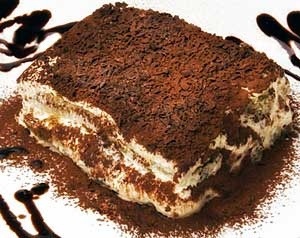
Mama’s Tiramisu

3 Aug

In my post about lasagna, I’ve hinted before that mom was mystifyingly Italian, for a Belgian. While she not only was is a passionate believer in enhancing verbal communication with dramatic facial expressions and/or hand gestures, she also prepared certain Italian staples like a real ‘Mama Gina’, with ‘passione’ and the prerequisite matriarchal dominance of the kitchen quarters.

As a child, I recall there were many times I’d be perched on the kitchen counters, intrigued by the tantalizing smells and mom’s busy activity, but there were an equal number of times where our mere presence in the kitchen would catapult her into a peppered tizzy and we instinctively knew to keep our distance. On ‘tiramisu-days’, we’d be lucky if we were even allowed to stand in the doorframe and watch… And even then, the sight of us would often result in an annoyed hand gesture and a quick dismissal, as though tiramisu was top secret and you needed special Governmental clearance before you could watch.

I’m not even sure where mom got the recipe below from, but if you’ve ever had the opportunity to savor the ‘real thing’ from a sun-drenched patio in Napoli, you’d instantly recognize that mom was on to something with this recipe. It’s so creamy and velvety, that the first bite of this deliciousness sends you straight to a cobblestone piazza somewhere in Rome. Furthermore, tiramisu is so easy to make, it should be a mortal sin, really.

While it takes some advance planning since tiramisu needs 8-10 hours in the refrigerator, it’s a ‘no bake’, foolproof dessert that is a real show-stopper. Heck, even your teenage daughter may briefly forget about your ‘lameness’ and kiss you on the cheek for this one. And wouldn’t that be worth it???

20130803-083535.jpg

MAMA’S TIRAMISU
(As per my mom’s top secret instructions… Sshhh!!!)
– 10.5 oz of ladyfinger cookies (*)
– 9 oz of mascarpone
– 3 eggs, yolks & whites separated
– 3.5 oz Amaretto liquor
– 7 oz of very strong cold coffee (coffee that is so strong, you can’t drink it!)
– 2 Tbsp of golden brown sugar
– 1/3 cup of sweetened cocoa powder (Nesquick works great!)
(*) The trick to a great tiramisu is using ‘real’ ladyfinger cookies like they sell in most of Europe. They are crunchy and light, and dusted with a bit of crystal sugar on the outside. The American ladyfinger cookies are too ‘cakey’ and not crunchy at all. If you can’t find Italian ladyfinger cookies or ‘savoiarde’, use Nilla wafers instead.If you don’t know what ladyfinger cookies look like, you can see some of them in the picture of my chocolate mousse post.

Beat egg yolks, mascarpone and sugar into a smooth consistency with your electric, handheld mixer.
In a clean, oil free bowl, beat egg whites into stiff peaks and gently fold into the egg/mascarpone mixture by hand.

Combine coffee and Amaretto liquor.

Take a 9×13 oven dish (or similar in size). No need to butter or flour, because this is a no-bake dessert!

Dip ladyfinger cookies quickly in coffee mixture one-by-one, and place in a single layer on the bottom of the pan. Don’t make the mistake I made once and drop your entire package of cookies all at once in the coffee, as you will not have enough time to take them out and they’ll disintegrate into a sloppy coffee mess before your thy very eyes. You need to really do this one by one, and dunk ’em, don’t let them ‘sit’ for too long in the liquid, as they will start to fall apart.

When you’ve completed a layer of coffee-dunked cookies, spread a 1/4 thick layer of the mascarpone mixture over the top with a spatula. Place another layer of coffee-dipped cookies on the top, and repeat this process until you reach the top of your pan. Finish with a layer of the mascarpone mixture.

Dust the top layer of the mascarpone mixture liberally with the powdered cocoa, cover and refrigerate overnight or for at least 8-10 hours. This will allow the cookies to soften and absorb the creaminess of the mascarpone. In the morning, the cocoa on the top will have melted into a shimmering layer of chocolatey goodness. If you like, you can sprinkle some shaved milk chocolate over the top right before serving.

Now go and make this. Do it now. Really, your family will love you.